 English




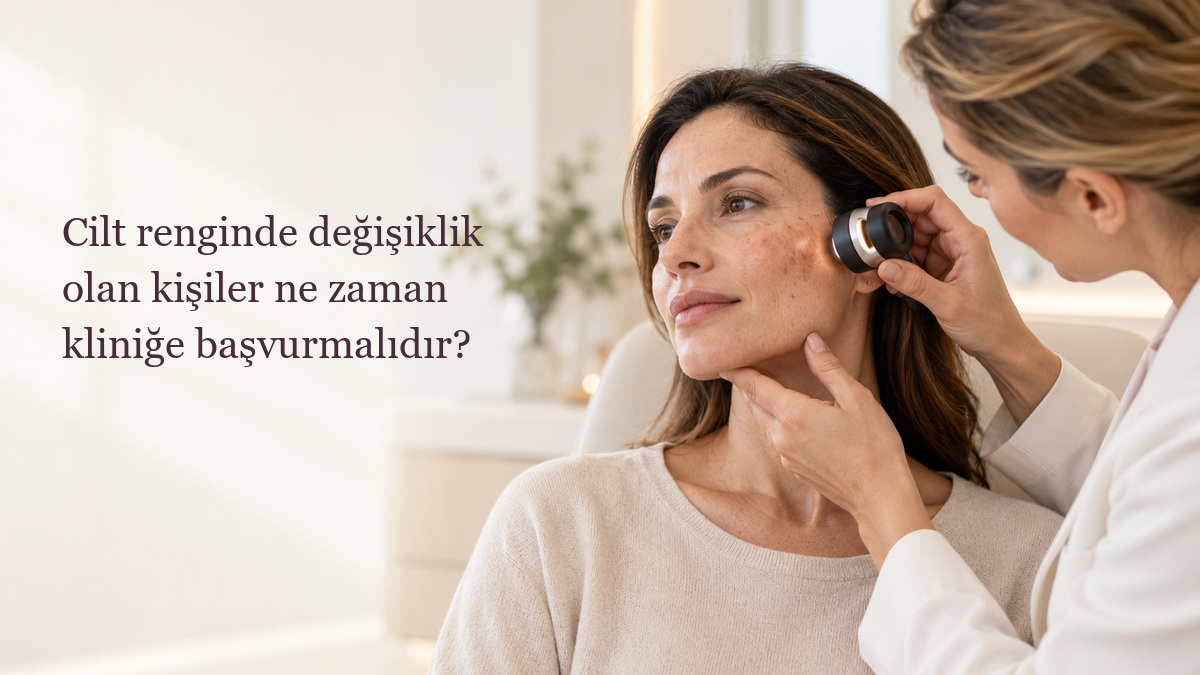
Table of Contents
- What Is a Change in Skin Color?
- What Are the Causes of Skin Darkening (Hyperpigmentation)?
- What Are the Causes of Skin Lightening (Hypopigmentation)?
- What Can Redness, Yellowing and Bluish Color Change Mean?
- Which Changes in Moles and Spots Are Warning Signs?
- When Do Skin Color Changes Require a Clinic Visit?
- What Is Done at the Examination?
- What Are the Treatment Approaches in Skin Color Changes?
- What Are the Special Considerations in Melasma and Post-Wound Darkening?
- What Is the Role of Medications and Products in Skin Color Change?
- Why Is Sun Protection Fundamental in Skin Color Problems?
- Is It Possible to Prevent Skin Color Changes?
- What Are Seasonal Recommendations for Skin Color Problems in Antalya?
- How Should You Apply Correctly for Skin Color Changes?
- Skin Color Changes in Children and Adolescents
- Frequently Asked Questions
What Is a Change in Skin Color?
A change in skin color is when a part or all of the skin looks darker, lighter, red, yellow, bluish or gray than normal. The change can take the form of spots, patches or a widespread difference in tone. Sometimes it is a harmless cosmetic problem; sometimes it is a sign of an underlying skin disease or a general health problem.
When the change started, how fast it is progressing, and whether there is itching, pain or other symptoms are important in determining the right approach.
What Are the Causes of Skin Darkening (Hyperpigmentation)?
Sun spots, melasma, post-acne and post-wound darkening (post-inflammatory hyperpigmentation), medications, hormonal changes (pregnancy, birth control pills), some cosmetic products and friction are common causes of darkening. Velvety darkening on the neck and underarms (acanthosis nigricans) may be associated with insulin resistance.
Treatment varies with the cause. Sun protection is a basic requirement in all types of hyperpigmentation.
What Are the Causes of Skin Lightening (Hypopigmentation)?
Vitiligo is an autoimmune condition caused by loss of melanin cells, marked by milk-white, sharply bordered spots. Pityriasis alba is mild light spots seen in children; fungal infection (pityriasis versicolor), post-inflammatory lightening and some scars can also cause color lightening.
Light spots require differential diagnosis. In vitiligo, early treatment is important in controlling spread; it is therefore necessary to see a dermatologist without waiting.
What Can Redness, Yellowing and Bluish Color Change Mean?
Persistent redness on the face may be a sign of skin diseases such as rosacea or seborrheic dermatitis. Yellowing of the skin and eyes may be jaundice (liver or bile duct disease), paleness may be anemia, and a bluish color on the lips and fingertips may be a lack of oxygen.
Conditions such as jaundice, sudden bluish color change and widespread paleness may require urgent medical evaluation. If these symptoms are present, a health facility should be visited without waiting.
Which Changes in Moles and Spots Are Warning Signs?
The "ABCDE" rule is a guide in the early recognition of skin cancer, especially melanoma: A (asymmetry), B (border irregularity), C (color variation), D (diameter, over 6 mm) and E (evolution over time). Spots that are new, growing quickly, bleeding, crusting or not healing are also warning signs.
If even one of these features is present, a dermatologist should be consulted without delay. Early diagnosis is vitally important in skin cancer. Dermoscopy and biopsy are performed if needed.
When Do Skin Color Changes Require a Clinic Visit?
You should seek help if you have a color change that starts suddenly or spreads quickly, spots accompanied by itching, pain, crusting or sores, darkening that appears after starting a medication, newly developed symmetrical brown spots on the face, light-colored patches or symptoms such as jaundice.
Even if you have a cosmetic concern, it is not right to use a care product or cosmetic procedure without knowing the type of spot. A diagnosis should be made first.
What Is Done at the Examination?
The doctor asks about your history, the medications you use, your sun exposure, skin diseases in the family and your cosmetic use. The skin is examined with a dermatoscope; special light (Wood's lamp), microscopic examination, blood tests or a biopsy may be requested if needed.
After the diagnosis is made, a treatment plan and follow-up program are created. If needed, work is done together with other specialties (internal medicine, endocrinology, oncology).
What Are the Treatment Approaches in Skin Color Changes?
In hyperpigmentation, sunscreen, topical agents (azelaic acid, vitamin C, tranexamic acid, retinoids; hydroquinone under a doctor's supervision if needed), chemical peels and laser options are considered. In vitiligo, topical drugs, light therapy and, in selected cases, surgical methods are used. In spots caused by fungus, antifungal treatment is needed.
Treatment should be planned individually according to the type of spot. The same method is not suitable for every spot, and some procedures can worsen the spot.
What Are the Special Considerations in Melasma and Post-Wound Darkening?
Melasma is a condition affected by sun and hormones with a high tendency to recur. Because laser and aggressive peels can worsen melasma, treatment should be chosen carefully and under a doctor's supervision. Post-wound and post-acne darkening, on the other hand, may partly improve on its own with time and sun protection.
In these situations, avoiding squeezing, scratching and products that irritate the skin is very important. Patience and regular sun protection are the basis of treatment.
What Is the Role of Medications and Products in Skin Color Change?
Some antibiotics, chemotherapy drugs, anti-malarial drugs, hormone treatments and some cosmetics can change skin color or cause spotting by causing light sensitivity. Some perfume and citrus products used together with excessive sun can also cause spots.
Tell the doctor about all the medications and products you use. Do not stop a medication on your own when a change is suspected to be drug-related.
Why Is Sun Protection Fundamental in Skin Color Problems?
UV rays increase pigment production and cause existing spots to worsen. In all skin color problems, especially hyperpigmentation and melasma, regular use of a broad-spectrum sunscreen is the most important step.
In addition to sunscreen, a hat, sunglasses and shade are also important. Treatments done without sun protection do not give lasting results.
Is It Possible to Prevent Skin Color Changes?
Not every change can be prevented; however, sun protection, avoiding products that irritate the skin, not squeezing wounds and pimples, consulting a doctor when using medications and healthy lifestyle habits reduce the risk.
Regular skin checks are recommended especially for people with many moles and a family history of skin cancer. Self-examination in front of a mirror is useful for noticing new or changing spots early.
What Are Seasonal Recommendations for Skin Color Problems in Antalya?
Because sun exposure is high in Antalya, the risk of spots and skin cancer may also increase. It is important to avoid direct sun between 10:00 and 16:00 in summer, to reapply sunscreen after getting into water and to use protective clothing.
Autumn and winter are generally a more suitable period for treating spots; however, the timing should be determined with the doctor according to the type of treatment.
How Should You Apply Correctly for Skin Color Changes?
Before applying, it is useful to note when the spot started, whether it has changed, and the medications and products you use. If possible, bring earlier photos of the spot.
In the examination by Dermatologist Specialist Dr. Melda Özekinci, the type of skin color change is determined; the necessary examinations and treatment plan are created individually. You can visit our contact page for information.
Skin Color Changes in Children and Adolescents
Birthmarks, café-au-lait spots, pityriasis alba and vitiligo are common in children. Most are harmless; however, many café-au-lait spots, quickly growing birthmarks or widespread light spots require evaluation by a pediatrician or dermatologist. Protecting children from the sun reduces the risk of spots and skin cancer later on.
Frequently Asked Questions
Do skin spots turn into cancer?
Most spots are harmless. However, spots that change, grow or look suspicious must be evaluated for skin cancer.
Can vitiligo be treated?
Yes, spread can be controlled and color regained with treatment; however, the response varies from person to person.
Does melasma go away completely?
Melasma is a condition prone to recurrence. Marked improvement can be achieved with treatment and regular sun protection; however, complete disappearance cannot be guaranteed.
Do sun spots go away at home?
Unsourced home applications do not reduce the spot and can cause irritation. A dermatologist's examination is recommended for treatment.
Which season is best for spot treatment?
Generally autumn and winter, when the sun's effect is reduced; however, it varies with the method and the person.





