English



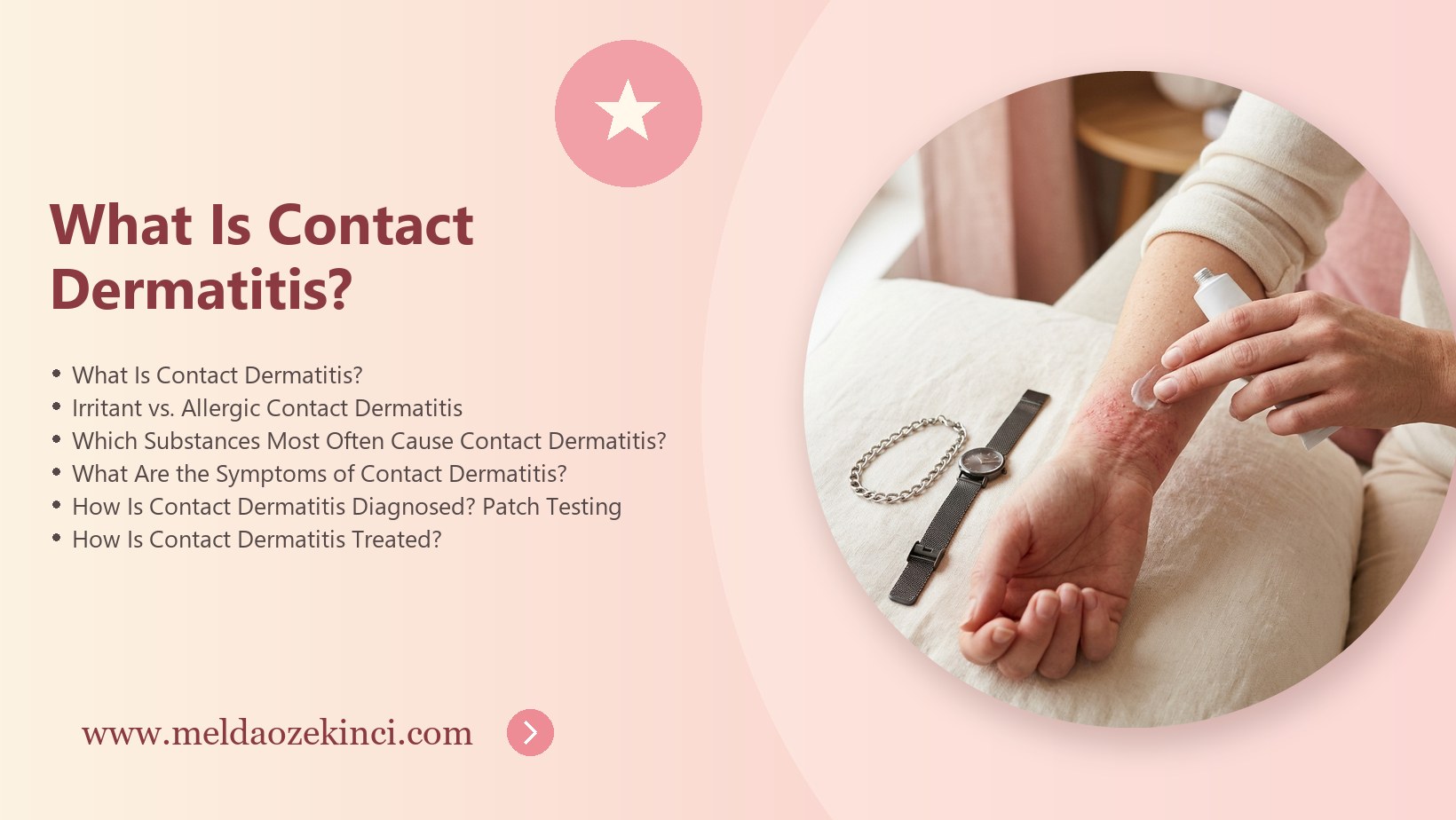

Table of Contents
- What Is Contact Dermatitis?
- Irritant vs. Allergic Contact Dermatitis
- Which Substances Most Often Cause Contact Dermatitis?
- What Are the Symptoms of Contact Dermatitis?
- How Is Contact Dermatitis Diagnosed? Patch Testing
- How Is Contact Dermatitis Treated?
- How Can Contact Dermatitis Be Prevented?
- Hand Eczema and Occupational Contact Dermatitis
- Dermatology Consultation for Contact Dermatitis in Antalya
- Frequently Asked Questions
What Is Contact Dermatitis?
Contact dermatitis is an inflammatory skin reaction that develops after the skin comes into contact with a substance. It shows up as redness, itching, dryness and sometimes fluid-filled blisters. It is a common type of eczema and can occur at any age.
It is not contagious. Once the causative substance is identified and avoided, symptoms usually improve markedly.
Contact dermatitis is an inflammatory reaction of the skin to a substance it comes into contact with and is one of the most common skin problems seen in dermatology practice. It is not contagious, and symptoms usually subside over time once contact with the trigger ends. However, as long as contact continues, the condition can become chronic.
Contact dermatitis can appear not only on the hands but also on other parts of the body such as the face, neck, earlobes, eyelids and feet. The location of the rash often gives an important clue about the trigger. For example, a reaction on the earlobes may point to metals in earrings.
Frequent recurrence of contact dermatitis usually indicates that contact with the trigger continues unnoticed. In this case, reviewing the daily routine in detail and sharing all products used with the doctor helps uncover a hidden trigger.
Irritant vs. Allergic Contact Dermatitis
Irritant contact dermatitis occurs when irritating substances such as detergents, soaps, solvents or frequent hand washing directly damage the skin barrier. It can develop in anyone and depends on how often and how long the exposure lasts.
Allergic contact dermatitis occurs when the immune system becomes sensitized to a specific substance. The reaction usually starts 24–72 hours after contact and can spread beyond the contact area.
Irritant contact dermatitis occurs when the skin's protective barrier is directly damaged by irritants such as soap, detergents, water or solvents, and it can develop in anyone. Allergic contact dermatitis, on the other hand, results from the immune system becoming sensitized to a specific substance and occurs only in sensitized people.
Distinguishing between the two types is not always easy, and both may be present together in some patients. Skin whose barrier has been damaged by irritant dermatitis allows allergens to penetrate more easily, increasing the risk of an allergic reaction. Protecting the barrier is therefore important in both types.
In allergic contact dermatitis, sensitization usually persists for a long time. A person who has developed an allergy to a substance may show a similar reaction even years later when exposed to it again. Keeping a list of allergens and sharing it with other doctors when necessary is helpful.
Which Substances Most Often Cause Contact Dermatitis?
Nickel (jewelry, watch straps, belt buckles, jeans buttons), fragrances, cosmetic preservatives, paraphenylenediamine (PPD) in hair dyes, rubber gloves and some topical medications are among the most common allergens.
Temporary “black henna” tattoos can also cause severe reactions due to their high PPD content.
Among the most common causes of allergic contact dermatitis are nickel in jewelry, watch straps and belt buckles, fragrances and preservatives in cosmetics, hair dyes, chemicals in rubber gloves and some topical medicines. In the irritant type, frequent handwashing and cleaning products are the main culprits.
It should be remembered that products described as natural or herbal can also cause allergic reactions. Some plant extracts and essential oils are among the common causes of contact dermatitis in sensitive people. Testing a new product on a small area before using it can reduce the risk.
Reactions to hair dyes can appear as swelling and itching on the scalp, forehead, around the ears and on the neck. In some cases the reaction can be severe. It is recommended to perform a preliminary test according to the manufacturer's instructions before using hair dye and to see a doctor if a reaction occurs.
What Are the Symptoms of Contact Dermatitis?
Redness, itching, burning, swelling and small fluid-filled blisters in the contact area are typical of the acute phase. In long-standing cases the skin thickens, becomes dry and cracks.
The shape of the rash often hints at the object involved, for example a rash exactly where a watch strap or earring sits.
Symptoms usually appear at the contact site as redness, itching, swelling and in some cases small blisters. In long-lasting cases, the skin becomes dry and thickened and cracks may form. Because symptoms of the allergic type can appear a day or two after contact, identifying the trigger can be difficult.
Scratching due to itching can increase inflammation and lead to secondary infections. It is important not to burst blisters, to keep the skin clean and moisturized, and to see a doctor without delay if symptoms worsen.
The severity of symptoms varies with the amount of substance, duration of contact and the condition of the skin at the time. Thin, sensitive areas such as the eyelids and face react more easily than the thicker palms. The choice of products applied to the face is therefore particularly important.
How Is Contact Dermatitis Diagnosed? Patch Testing
A detailed history and examination are essential. When allergic contact dermatitis is suspected, patch testing can identify the specific allergen.
In patch testing, standard allergens are applied to the back and evaluated on set days. The result clearly shows which substances should be avoided.
Patch testing is the main method used to identify the cause of allergic contact dermatitis. During the test, common allergens are placed on the back with special patches, and the skin's reaction is evaluated after set periods. The back should not get wet and heavy sweating should be avoided during the test.
Patch test results clearly show which substances the patient should avoid. The doctor informs the patient about which everyday products may contain the substances that tested positive. Getting into the habit of reading product labels greatly helps prevent recurrences.
Patch test results can be affected if the test is performed while symptoms are active or while certain medicines are being used. The timing of the test is therefore planned by the doctor, and some medicines may need to be stopped temporarily beforehand. Following the doctor's guidance ensures accurate results.
How Is Contact Dermatitis Treated?
The most important step is avoiding the trigger. In the acute phase, topical corticosteroids, soothing compresses and barrier-repairing moisturizers are used. A doctor may recommend antihistamines for itching.
Widespread or severe reactions may require a short course of systemic treatment. Random creams or herbal mixtures can make things worse.
The first and most important step in treatment is identifying the substance causing the symptoms and stopping contact with it. In addition, anti-inflammatory creams, moisturizers that repair the skin barrier and treatments to relieve itching may be used. In widespread and severe cases, the doctor may consider other treatment options.
It is important to use creams for the duration and frequency recommended by the doctor. Stopping treatment abruptly when symptoms ease can sometimes cause them to return. Moisturizer use should continue regularly even after healing.
During healing, full recovery of the skin's barrier function can take longer than the disappearance of visible symptoms. During this period, the skin remains sensitive to external factors. It is therefore recommended to continue protective measures and moisturizing in the weeks after healing.
How Can Contact Dermatitis Be Prevented?
Basic measures include wearing cotton-lined protective gloves for housework, choosing fragrance-free and hypoallergenic products, selecting nickel-free jewelry and moisturizing regularly after washing hands.
Testing a new cosmetic on a small area, such as behind the ear, for a few days before full use can be helpful.
For prevention, keeping the skin barrier strong is as important as avoiding triggers. Wearing suitable gloves during housework, drying hands thoroughly after washing and applying moisturizer regularly significantly reduce the risk of irritant contact dermatitis.
One thing to keep in mind with gloves is that moisture and sweat trapped inside during long wear can also irritate the skin. In this case, wearing cotton liners inside the gloves and removing the gloves at intervals is recommended. People sensitive to rubber should choose gloves made of other materials.
When switching to new cosmetics, not changing several products at once makes it easier to find the trigger if a reaction occurs. Fragrance-free products with short ingredient lists designed for sensitive skin can be a safer choice for people with a history of contact dermatitis.
Hand Eczema and Occupational Contact Dermatitis
Hairdressers, healthcare workers and people working in cleaning and construction are at risk because of frequent contact with water and chemicals. Occupational exposure is one of the most common causes of hand eczema.
Choosing the right gloves at work and using barrier creams regularly help prevent the condition from becoming chronic.
Occupational contact dermatitis is more common in professions where the hands are frequently exposed to water and chemicals, such as healthcare workers, hairdressers, cleaning staff, cooks and construction workers. For these people, protective measures at work are as important to treatment success as medication.
Hand eczema is not just a physical problem; it can lead to lost work time and a marked decline in quality of life. Recognizing and treating symptoms early prevents the condition from becoming chronic. Cooperating with the employer on protective measures at work can also be helpful.
In occupational cases, reviewing the safety data sheets of chemicals used at work helps identify which substances pose a risk. In some cases, small changes in work processes or the use of different products make it possible for the employee to continue in their profession.
Dermatology Consultation for Contact Dermatitis in Antalya
For recurring or non-healing rashes, finding the trigger is essential for a lasting solution. In the consultation with dermatologist Dr. Melda Özekinci, the cause of your complaints is investigated, further tests are planned if needed, and a personalized treatment and prevention program is created.
When visiting a dermatologist, noting the cosmetics, cleaning products and workplace substances you use makes it easier to find the trigger. In regions like Antalya, where tourism and the service sector are prominent, working conditions should also be taken into account.
Regular check-ups during treatment make it possible to assess its effect and make changes if needed. Open communication with the doctor, sharing difficulties faced in daily life and following recommendations directly affect treatment success.
The goal in treating contact dermatitis is not only to relieve current symptoms but also to build lasting habits that prevent recurrences. Knowing one's triggers, learning to choose the right products and maintaining regular skin care significantly improve quality of life in the long term.
Frequently Asked Questions
Is contact dermatitis contagious?
No, it is not contagious.
How long does contact dermatitis take to heal?
When the trigger is avoided and the condition is treated, marked improvement is usually seen within 1–3 weeks.
Does a nickel allergy go away?
Allergic sensitization is usually permanent, so nickel contact should be avoided.
Which cream should be used for contact dermatitis?
The cream and duration of use should be determined by a doctor.