 English


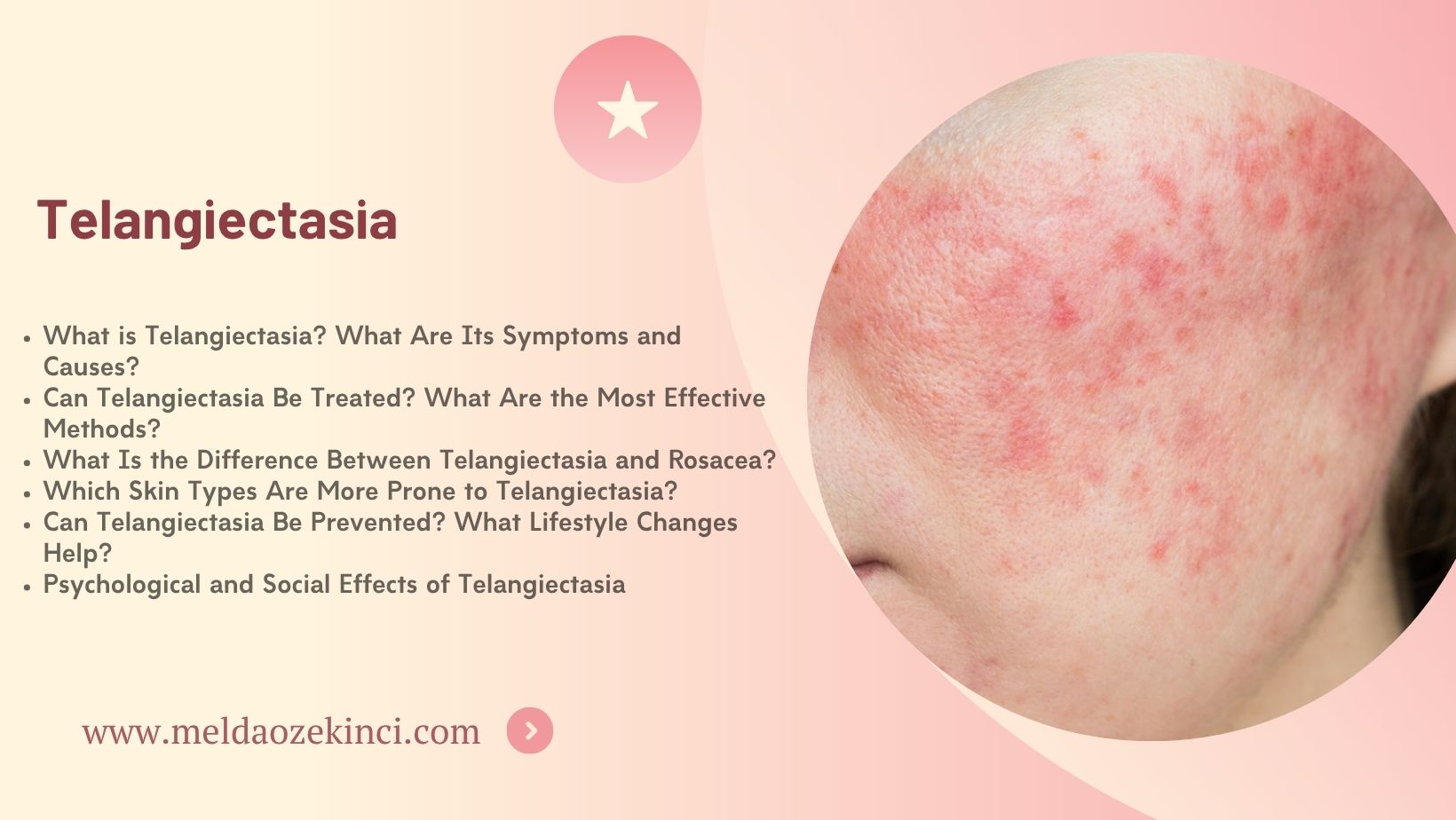

Table of Contents
- What is Telangiectasia? What Are Its Symptoms and Causes?
- Can Telangiectasia Be Treated? What Are the Most Effective Methods?
- What Is the Difference Between Telangiectasia and Rosacea?
- Which Skin Types Are More Prone to Telangiectasia?
- Can Telangiectasia Be Prevented? What Lifestyle Changes Help?
- Psychological and Social Effects of Telangiectasia
What is Telangiectasia? What Are Its Symptoms and Causes?
Telangiectasia is a skin condition caused by the dilation of small blood vessels on the surface of the skin. This usually becomes prominent on the face, nose, cheeks, and chin. Visually, it appears as a fine network of red, pink, or purple vessels.
Dermatological examination is essential to diagnose this condition. Dermatologist Dr. Melda Özekinci is one of the leading experts in accurate diagnosis and treatment of telangiectasia. A treatment plan is created based on skin type, severity of symptoms, and underlying causes.
Among the symptoms of telangiectasia are persistent redness, visible fine vessels on the skin surface, and sensitivity. In some cases, symptoms may worsen in cold weather or when consuming hot drinks. This can negatively affect the patient’s quality of life.
Main causes include genetic predisposition, harmful effects of sun exposure, excessive alcohol consumption, hormonal changes, and certain skin diseases. Long-term exposure to hot water and environmental factors can also trigger telangiectasia.
Treatment methods typically include laser treatment, radiofrequency applications, and supportive skincare products. However, for accurate and effective treatment, it is important to seek professional help from experienced specialists like Dr. Melda Özekinci.
Telangiectasia is a skin condition that requires attention. With early diagnosis and appropriate treatment, symptoms can be controlled and appearance improved.
Can Telangiectasia Be Treated? What Are the Most Effective Methods?
Telangiectasia is a condition where small surface vessels become visible, often causing aesthetic concerns. The big question is: Can telangiectasia be treated? The answer is clear: Yes, it can be treated, and many effective methods are available.
Dr. Melda Özekinci, an experienced dermatologist in telangiectasia treatment, creates personalized treatment plans. The process varies depending on the patient's skin type, lesion severity, and causes.
One of the most commonly used methods is laser therapy. Laser targets the dilated vessels, reducing their appearance. It is a minimally invasive method with a short recovery time.
Another effective method is radiofrequency therapy, which shrinks the vessels and reduces telangiectasia. Additionally, treatment can be supported by using specialized skincare products.
It’s crucial that these treatments are carried out under the supervision of a specialist dermatologist. Dr. Melda Özekinci offers safe and effective solutions with her expertise and experience.
The answer to “Can telangiectasia be treated?” is yes, and many successful outcomes are achievable today with modern methods.
What Is the Difference Between Telangiectasia and Rosacea?
Telangiectasia and Rosacea are often confused skin conditions, but they are actually distinct. Knowing the difference is critical for accurate diagnosis and treatment.
Telangiectasia typically appears as visible, dilated blood vessels on the surface of the skin. It often causes cosmetic concerns but does not lead to serious health problems. Dr. Melda Özekinci offers suitable treatment options to help improve appearance.
Rosacea, on the other hand, is a more complex skin disease. It manifests as facial redness, acne-like spots, and sometimes burning or itching. Rosacea is a chronic condition often triggered by immune and environmental factors.
While telangiectasia is limited to vessel visibility, rosacea includes broader skin symptoms and inflammation. This distinction directly affects treatment methods.
Rosacea treatment usually involves anti-inflammatory medications, lifestyle changes, and dermatological care. In contrast, aesthetic treatments such as laser or radiofrequency are preferred for telangiectasia.
Dr. Melda Özekinci provides targeted and effective solutions for both telangiectasia and rosacea patients, optimizing their skin health and appearance.
Which Skin Types Are More Prone to Telangiectasia?
Telangiectasia is a condition where small vessels in the skin become more visible. So, which skin types are more prone to this condition? Dermatologist Dr. Melda Özekinci notes that telangiectasia is more common in sensitive and thin skin types.
Thin skin naturally has a more visible vascular structure, making telangiectasia easier to develop. Also, in fair-skinned individuals, sun exposure can increase skin sensitivity and vessel dilation.
Oily skin and combination skin types are less frequently affected by telangiectasia, as they tend to be thicker and more resilient. However, excessive sun exposure and environmental factors can still increase the risk.
Sensitive skin types are more vulnerable to external factors. Wind, cold weather, and chemical-based products can trigger vessel dilation. Therefore, telangiectasia is more common in sensitive skin.
Dr. Melda Özekinci emphasizes the importance of individualized treatments for telangiectasia and creates treatment plans suited to the patient’s skin type.
To prevent telangiectasia, it is essential to use sunscreen regularly, avoid irritating products, and follow proper dermatological care.
Can Telangiectasia Be Prevented? What Lifestyle Changes Help?
Telangiectasia is a condition where small vessels on the skin become visible and can be a source of discomfort for many. So, can telangiectasia be prevented? According to Dr. Melda Özekinci, lifestyle changes play a major role in prevention.
Sunlight is one of the primary triggers of telangiectasia. Therefore, using high-SPF sunscreen regularly is essential for skin health. It’s also important to avoid extreme heat or cold to prevent vessel dilation.
Stress is another factor that negatively affects skin health. Stress management techniques may reduce the likelihood of telangiectasia. Practices such as meditation, yoga, or regular exercise can help.
Smoking negatively affects vascular health and increases the risk of telangiectasia. Dr. Melda Özekinci emphasizes that avoiding smoking is crucial not only for general health but also for skin health.
In terms of skincare, it is important to avoid irritating chemicals and use products suitable for sensitive skin. Proper moisturization and dermatological support strengthen the skin barrier.
Dr. Melda Özekinci highlights the importance of early prevention and creates personalized protective and treatment plans for each individual.
Psychological and Social Effects of Telangiectasia
Telangiectasia is not only an aesthetic concern on the skin but can also affect an individual’s psychological and social life. According to dermatologist Dr. Melda Özekinci, this condition can severely damage a person’s self-confidence.
Concerns about skin appearance can lead to withdrawal from social environments, embarrassment, and isolation. This may trigger psychological stress and anxiety disorders over time.
Reduced social interaction also negatively affects a person’s work and personal life. This is especially noticeable in young adults and people with high public visibility.
Dr. Melda Özekinci emphasizes that telangiectasia should be considered not just a physical issue but also an emotional problem. Early diagnosis and appropriate treatment can minimize these effects.
During the treatment process, psychological support is recommended alongside dermatological interventions. This way, patients can feel better and become more active in their social lives.
The psychological and social effects of telangiectasia should not be overlooked, and a comprehensive approach should be adopted with the support of a specialist dermatologist.





