 English


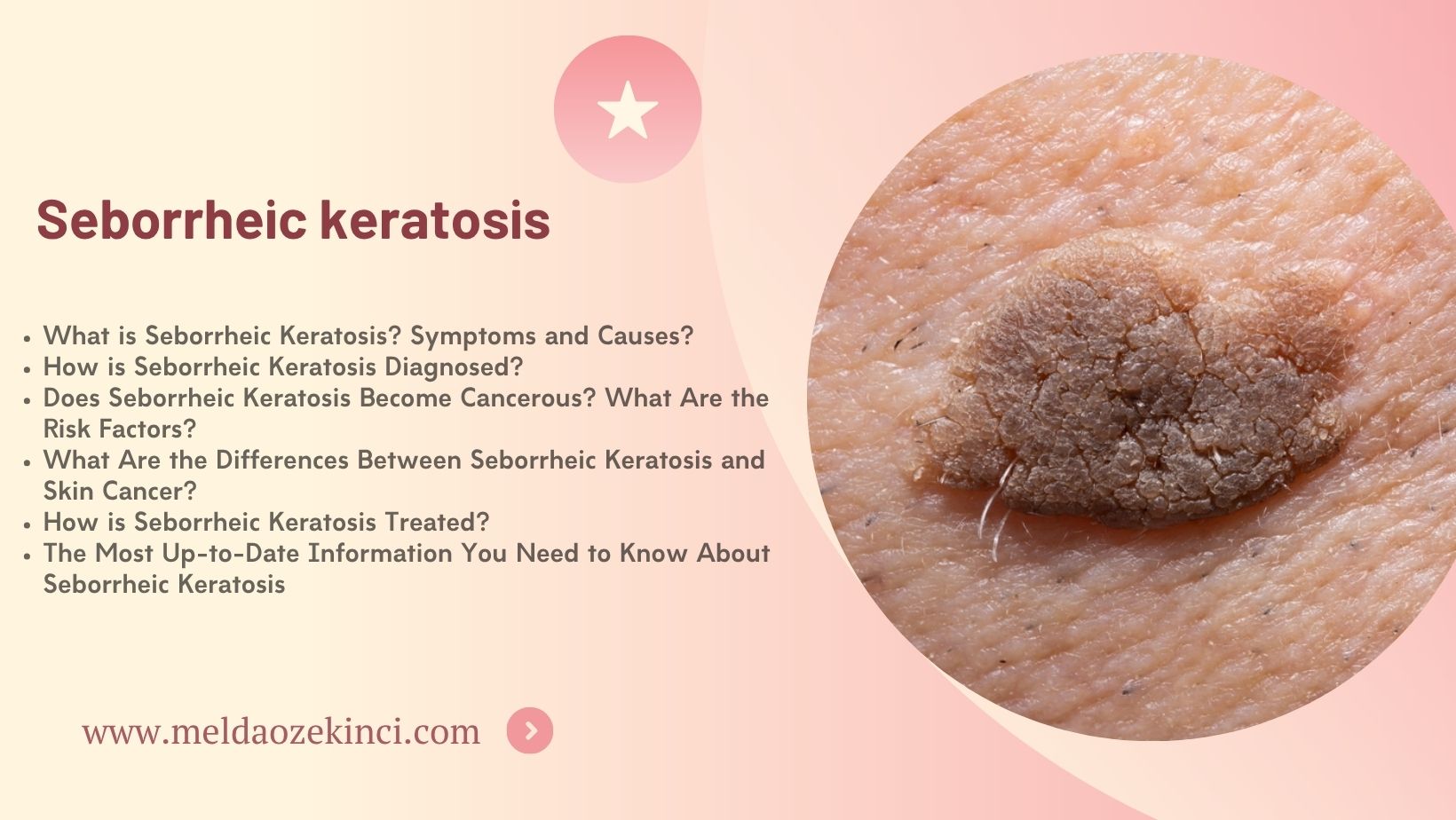

Table of Contents
- What is Seborrheic Keratosis? Symptoms and Causes?
- How is Seborrheic Keratosis Diagnosed?
- Does Seborrheic Keratosis Become Cancerous? What Are the Risk Factors?
- What Are the Differences Between Seborrheic Keratosis and Skin Cancer?
- How is Seborrheic Keratosis Treated?
- The Most Up-to-Date Information You Need to Know About Seborrheic Keratosis
What is Seborrheic Keratosis? Symptoms and Causes?
Seborrheic keratosis is a common, usually age-related benign skin lesion. It appears on the skin surface as raised, brownish or blackish spots. Symptoms of seborrheic keratosis usually do not cause itching or pain; however, its appearance may be cosmetically disturbing.
The lesions typically form on areas exposed to the sun such as the face, chest, and back. While the exact causes of seborrheic keratosis are unknown, aging and genetic factors are believed to play a role. Also, prolonged exposure to sunlight can trigger its development.
With the experience of Dermatologist Specialist Dr. Melda Özekinci, seborrheic keratosis diagnosis can be easily made and suitable treatment options are offered. Often, cryotherapy, laser, or surgical methods are preferred for treating these lesions.
It should be noted that although seborrheic keratosis is benign, if lesions show rapid growth, color change, or bleeding, skin cancer risk should be considered and a specialist consulted.
According to Melda Özekinci’s recommendations, regular dermatological check-ups and sun protection methods are important for maintaining skin health.
How is Seborrheic Keratosis Diagnosed?
Seborrheic keratosis is a common skin lesion that typically appears with aging. The diagnosis process of these lesions is vital for correct and early intervention. Dermatologist Specialist Dr. Melda Özekinci is experienced and a leading name in the field, providing reliable solutions to her patients in the diagnosis of seborrheic keratosis.
The symptoms of seborrheic keratosis are usually raised, brown or black, rough-surfaced skin lesions. These lesions are generally harmless but can cause concern due to their appearance. Correct diagnosis requires examination by an expert dermatologist. Dr. Melda Özekinci’s examination methods allow detailed evaluation of the lesion's structure on the skin.
One of the most commonly used methods in the diagnostic process is dermatoscopy. This method involves magnifying the skin surface to distinguish seborrheic keratosis from other skin diseases. Dr. Melda Özekinci offers her patients quick and accurate diagnosis using this technology.
In some cases, biopsy may be applied to confirm the diagnosis. Biopsy involves taking a small tissue sample from the lesion and examining it in a laboratory. This helps differentiate malignant formations and plan appropriate treatment. Dr. Özekinci performs biopsy procedures prioritizing patient comfort.
Early and accurate intervention in the diagnosis of seborrheic keratosis increases treatment success. Dermatologist Specialist Dr. Melda Özekinci plays an important role in protecting her patients' skin health with her expert services.
Does Seborrheic Keratosis Become Cancerous? What Are the Risk Factors?
Seborrheic keratosis is a common skin lesion that usually appears with aging. This condition is a benign (non-cancerous) formation with a very low risk of cancerization. As Dermatologist Specialist Dr. Melda Özekinci states, seborrheic keratosis is generally harmless and does not pose a serious health threat to patients.
However, among the risk factors for seborrheic keratosis, aging plays a significant role. It is more frequently seen in individuals over 40 years old. Also, genetic predisposition and prolonged exposure to sunlight are factors affecting its development. Therefore, sun protection use and regular dermatological check-ups are important for maintaining skin health.
Dr. Melda Özekinci emphasizes that seborrheic keratosis does not turn into cancer by itself but may sometimes be confused with skin cancers. Hence, new lesions on the skin and changes in existing ones should be monitored over time. Doctor examination is critical for correct diagnosis and differential diagnosis.
Seborrheic keratosis usually does not require treatment, but in cases of cosmetic concerns or lesion irritation, laser, cryotherapy, or surgical methods can be applied by a dermatologist. Dr. Melda Özekinci's expertise and updated treatment approaches increase patient comfort and facilitate treatment processes.
Although the risk of cancerization is very low, regular check-ups are necessary for skin health. Knowing the risk factors, early diagnosis, and proper management can prevent possible complications.
What Are the Differences Between Seborrheic Keratosis and Skin Cancer?
Seborrheic keratosis and skin cancer differ in many ways. First, seborrheic keratosis is usually a benign skin lesion and does not carry a risk of cancerization. Therefore, seborrheic keratosis appears as a raised, brown or black, superficially attached lesion on the skin. In contrast, skin cancer is the uncontrolled proliferation of malignant cells and can lead to serious outcomes if untreated.
Seborrheic keratosis mostly appears in older individuals and can develop due to genetic factors as well as sun exposure. On the other hand, skin cancer risk factors include prolonged sun exposure, family history, and weakened immune system. Therefore, early diagnosis and treatment are required for skin cancer. According to Dermatologist Specialist Dr. Melda Özekinci, regular dermatological control and preventive measures play a critical role in reducing the risk of skin cancer.
Seborrheic keratosis diagnosis is usually made through clinical examination. Sometimes advanced imaging methods like dermatoscopy are also used. Skin cancer, however, is definitively diagnosed with biopsy and different treatment methods are applied depending on its type. At this point, the experience of Dermatologist Specialist Dr. Melda Özekinci is very important for correctly guiding patients and successfully managing the treatment process.
The main difference between seborrheic keratosis and skin cancer is that seborrheic keratosis is benign and does not carry a risk of cancerization. However, any lesion noticed on the skin must be evaluated by a specialist dermatologist. Following Dr. Melda Özekinci’s recommendations, you can protect your skin health with early diagnosis and correct treatment.
How is Seborrheic Keratosis Treated?
Seborrheic keratosis is one of the frequently seen benign lesions on the skin. It usually appears with aging and may require treatment due to aesthetic concerns or complaints such as itching. Seborrheic keratosis treatment is applied by different methods and each patient’s condition must be carefully evaluated by experts like Dermatologist Specialist Dr. Melda Özekinci.
The most common treatment methods for seborrheic keratosis include cryotherapy, which is freezing the lesion with liquid nitrogen. This method rapidly reduces the size of the lesion and is generally effective in a single session. However, depending on the size and depth of the lesion, cauterization or surgical excision may be preferred in some cases.
Laser treatment is also a modern and effective option for seborrheic keratosis. With laser, the raised structure on the skin is delicately removed without damaging the surrounding tissue. In this method, intervention by an experienced dermatologist like Dr. Melda Özekinci is critical for treatment success.
Paying attention to post-treatment skin care speeds up recovery and reduces the risk of scarring. Also, because seborrheic keratosis can recur, regular dermatological control is important. Dermatologist Specialist Dr. Melda Özekinci provides comprehensive information and personalized care recommendations to her patients.
The Most Up-to-Date Information You Need to Know About Seborrheic Keratosis
Seborrheic keratosis is a common and generally benign skin lesion. Its increasing frequency with age shows that it is directly related to the aging process. However, many people may confuse seborrheic keratosis with skin cancer due to its appearance. Therefore, correct diagnosis and treatment by an expert dermatologist are essential.
Dermatologist Specialist Dr. Melda Özekinci applies different methods in the treatment of seborrheic keratosis based on the patient's skin type and lesion size. These methods include cryotherapy, laser treatment, and surgical intervention. Each method is planned individually and the most appropriate treatment is selected.
Seborrheic keratosis can cause itching, irritation, or cosmetic concerns. In these cases, dermatologist control is necessary. Early diagnosis facilitates the treatment process for patients and prevents possible complications. Moreover, regular dermatological check-ups are crucial for skin health.
Most seborrheic keratosis lesions do not turn into cancer. However, lesions showing significant changes should be immediately evaluated by a dermatologist. Dr. Melda Özekinci provides detailed information to her patients on this matter, encouraging them to act consciously.





