 English


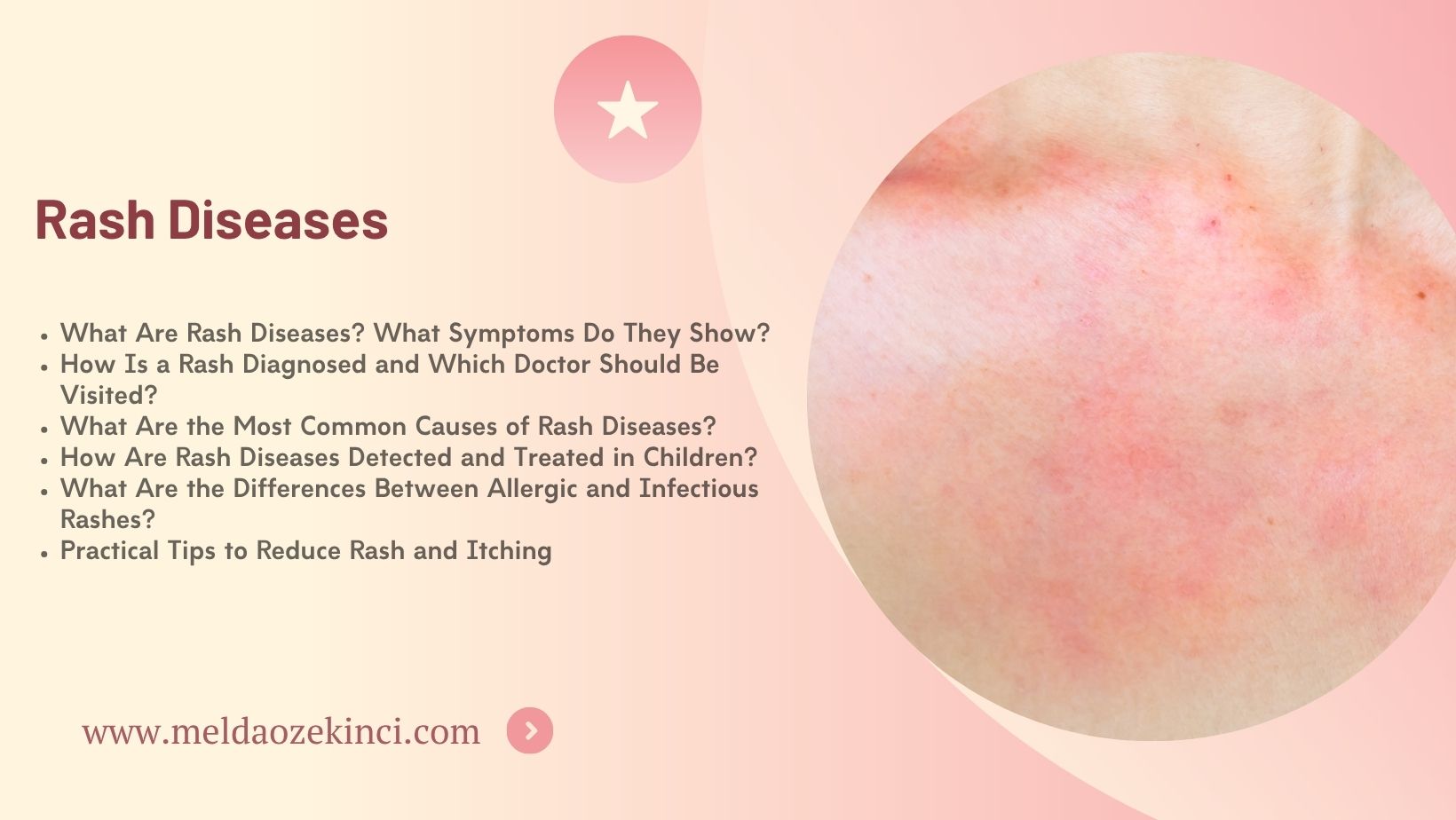

Table of Contents
- What Are Rash Diseases? What Symptoms Do They Show?
- How Is a Rash Diagnosed and Which Doctor Should Be Visited?
- What Are the Most Common Causes of Rash Diseases?
- How Are Rash Diseases Detected and Treated in Children?
- What Are the Differences Between Allergic and Infectious Rashes?
- Practical Tips to Reduce Rash and Itching
What Are Rash Diseases? What Symptoms Do They Show?
Rash diseases are skin reactions that appear in various forms and can arise from different causes. These diseases can occur due to many factors such as allergic reactions, infections, immune system problems, or environmental factors. According to Dermatologist Specialist Dr. Melda Özekinci, rash symptoms must be well analyzed for accurate diagnosis and treatment.
Symptoms of rashes usually manifest as redness, itching, swelling, scaling, and sometimes fluid-filled blisters. The shape and spread of the rash provide important clues about the underlying disease. For example, eczema rashes typically come with dryness and flaking, while psoriasis is characterized by thick, silvery scales.
One of the most common causes of these diseases is the body's allergic responses. Dust, pollen, certain foods, or cosmetic products can cause rashes. Also, infections can cause skin rashes. Bacterial, viral, or fungal infections can lead to various types of rashes. Specialist Dr. Melda Özekinci emphasizes that early diagnosis and proper treatment can control these problems.
Rash diseases can sometimes be signs of systemic diseases. Rashes can be seen in autoimmune diseases such as lupus, and in these cases, the general condition of the patient must be taken into account. To understand which disease the rash is related to, a doctor’s examination and biopsy, if necessary, are important.
Rashes on the skin should not be ignored, especially those that persist for a long time or cause severe itching; in such cases, it is essential to consult a specialist like Dermatologist Specialist Dr. Melda Özekinci. This way, the source of the disease can be identified and an appropriate treatment plan can be developed.
How Is a Rash Diagnosed and Which Doctor Should Be Visited?
Rash can be a symptom of many different skin diseases, and accurate diagnosis requires expert evaluation. The answer to how a rash is diagnosed begins with a dermatologist examining the patient's complaints, rash type, spread, and duration.
Rash usually presents with symptoms like itching, redness, swelling, or scaling. These symptoms can result from many causes ranging from different skin diseases to allergic reactions. Therefore, rash diagnosis must definitely be made by a specialist physician.
When rash symptoms are noticed, the best step is to consult a dermatology specialist. Dermatologists, as experts in skin diseases, provide accurate diagnosis through detailed examination and, if necessary, advanced tests like biopsy. Dermatologist Specialist Dr. Melda Özekinci offers reliable diagnosis and treatment services with her experience in the field.
Once the cause of the rash is identified, the treatment plan is shaped according to the type of disease. Some rashes may be simple skin irritations or allergic reactions, while others may be signs of infections or chronic diseases. Therefore, early diagnosis is lifesaving.
The question of which doctor to visit depends on the cause of the rash. If the rash is limited to the skin, it is best to see a dermatology specialist. However, if it could be a sign of a systemic disease, referrals to internal medicine, allergy, or immunology specialists may be needed. In this process, the dermatologist’s referral plays a critical role.
For proper diagnosis and treatment of rashes, it is essential to visit a dermatology specialist. Dermatologist Specialist Dr. Melda Özekinci stands out with her experience and care she shows to her patients in this field.
What Are the Most Common Causes of Rash Diseases?
Rash diseases are characterized by various rednesses and inflammations on the skin. These types of rashes can arise from many different causes. The experience of Dermatologist Specialist Dr. Melda Özekinci is very important for patients to reach the correct diagnosis and treatment.
Allergic reactions are one of the most common causes of rashes. The body's excessive response to certain substances can cause itchy and red rashes on the skin. Especially chemical substances, perfumes, or some foods can cause such allergic rashes.
Infections are also an important cause of rashes. Bacterial, viral, or fungal infections can cause various types of rashes on the skin. They are especially seen more frequently in children and people with weakened immune systems.
Eczema and psoriasis, which are chronic skin diseases, also cause recurring rashes. Proper skin care and regular doctor follow-up are necessary for managing these diseases.
Drug reactions are also common among rash diseases. Some medications can cause rashes and itching as side effects. In such cases, medication changes and dermatological evaluation are required.
Stress and hormonal changes also have a significant effect on skin health. Stress-related rashes are often seen especially in young people and can sometimes be confused with other causes.
Dermatologist Specialist Dr. Melda Özekinci recommends detailed examination and appropriate tests for accurate diagnosis of rashes. Early diagnosis and treatment are critically important for protecting skin health.
How Are Rash Diseases Detected and Treated in Children?
Rash diseases in children can arise from many different causes and early diagnosis is important. Rashes generally manifest as redness, swelling, or scaling on the skin. It is the first step for parents to notice these symptoms for appropriate treatment.
Rash diseases in children often result from infections, allergic reactions, or dermatological diseases. Conditions like eczema and contact dermatitis are frequently seen on children's sensitive skin.
Early intervention and accurate diagnosis benefit from the clinical experience and recommendations of Dermatologist Specialist Dr. Melda Özekinci. Dr. Özekinci performs detailed assessments of rash causes in children and creates personalized treatment plans. This reduces discomfort and protects skin health.
Diagnosis of rashes may require physical examination and sometimes laboratory tests. Allergy tests and skin biopsies are used for definitive diagnosis. The treatment process varies depending on the cause, but generally includes support with topical creams, antihistamines, and moisturizers.
Especially in children, care must be taken with medication use, and doctor supervision is essential. Dr. Melda Özekinci supports families with reliable and effective treatment methods, prioritizing children's comfort.
Rash diseases in children can lead to serious problems if not diagnosed and treated promptly. Therefore, when symptoms are noticed, consulting an expert dermatologist like Dr. Melda Özekinci is the right step.
What Are the Differences Between Allergic and Infectious Rashes?
Allergic rash and infectious rash are two types of skin conditions that look similar but differ in causes and symptoms. Allergic rash occurs as an excessive immune response to a harmless substance, for example, some chemicals, foods, or medications. On the other hand, infectious rash results from bacteria, viruses, or fungi damaging the skin.
Symptoms of allergic rash include itching, redness, swelling, and sometimes fluid-filled blisters. It is usually limited to the area of contact. Infectious rash often comes with systemic symptoms like fever, pain, and inflammation. Skin wounds, crusting, or pus accumulation may be seen in these rashes.
In treatment, the key step in allergic rash is identifying and removing the allergen. Antihistamines and topical corticosteroids are commonly used. Treatment of infectious rashes generally requires antibiotics, antiviral, or antifungal medications. Therefore, consulting specialists like Dermatologist Specialist Dr. Melda Özekinci is important for accurate diagnosis and treatment.
In both cases, professional support is critical when skin changes are observed to ensure treatment success. This way, both allergic rash and infectious rash can be effectively managed.
Practical Tips to Reduce Rash and Itching
For those looking for practical ways to reduce rash and itching, effective methods exist. Skin rashes generally result from various allergic reactions, infections, or skin irritations. Dermatologist Specialist Dr. Melda Özekinci states that with the right treatment approaches, complaints can be minimized.
First of all, skin moisturization is very important. Dry skin leads to increased itching and rashes. Using fragrance-free and hypoallergenic moisturizers recommended by Dr. Melda Özekinci helps strengthen the skin's natural barrier. Also, showering with lukewarm water instead of hot water and avoiding frequent showers protects the skin.
Applying cold compresses is also beneficial for reducing itching. Cold alleviates skin irritation and inflammation while reducing the sensation of itching. If itching persists, appropriate antihistamines or topical corticosteroid creams can be used under dermatologist supervision.
As Dr. Melda Özekinci points out, correctly identifying the cause of rash and itching is critical for treatment success. In some cases, avoiding allergens, regulating skin care routines, and managing stress through lifestyle changes are effective in controlling symptoms.
It is recommended to choose cotton and breathable fabrics instead of synthetic clothes that often irritate the skin. With these simple but effective precautions, rash and itching complaints can be significantly reduced.





