English



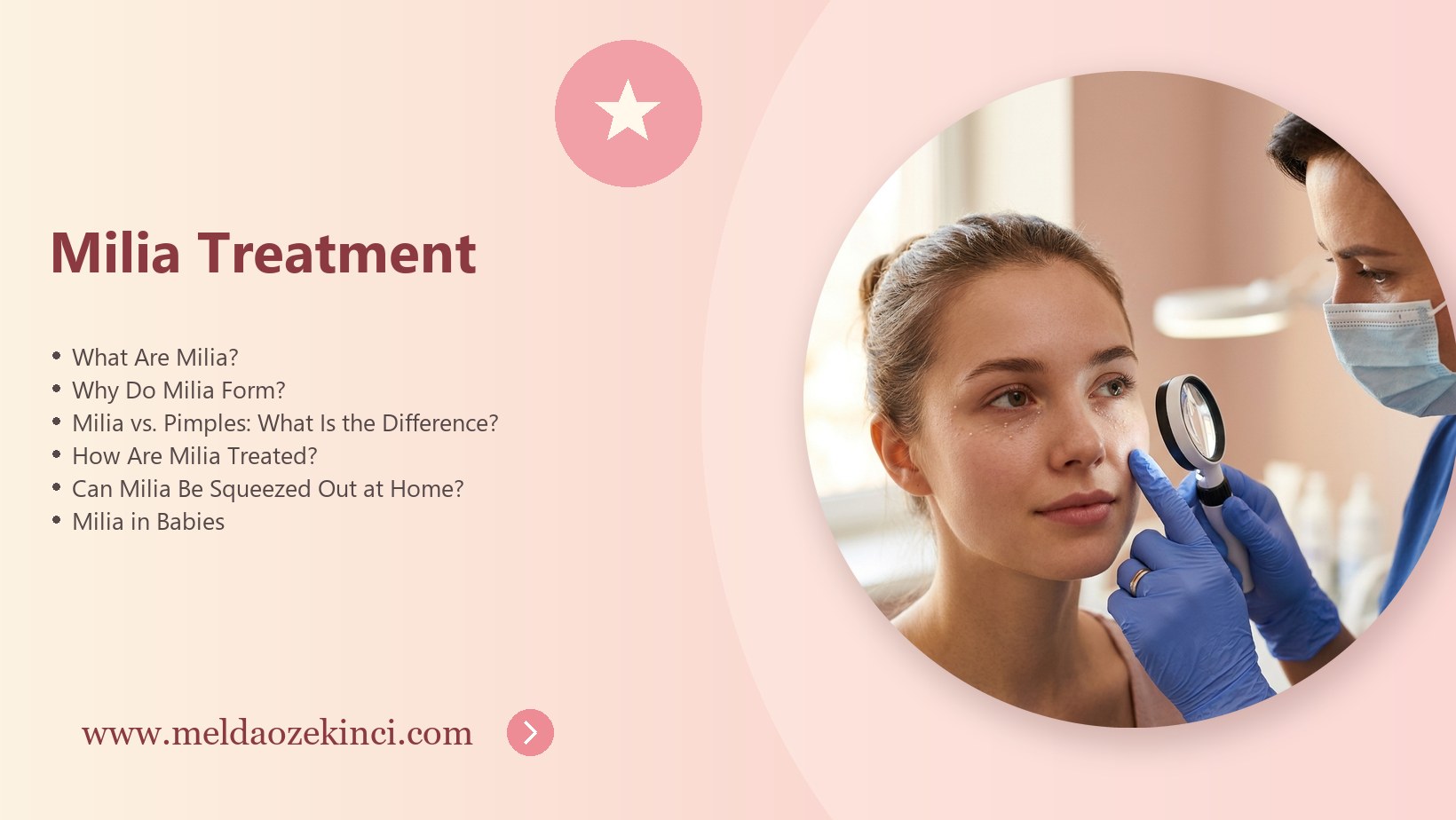

Table of Contents
- What Are Milia?
- Why Do Milia Form?
- Milia vs. Pimples: What Is the Difference?
- How Are Milia Treated?
- Can Milia Be Squeezed Out at Home?
- Milia in Babies
- How Can Milia Be Prevented?
- Milia Around the Eyes
- Milia Treatment in Antalya
- Frequently Asked Questions
What Are Milia?
Milia are small, firm, white or yellowish cysts, 1–2 mm in size, containing keratin trapped under the skin. They most often appear around the eyes, on the eyelids, cheeks and nose.
They are benign and do not hurt or itch, but they can be a cosmetic concern, especially on the face.
Why Do Milia Form?
Primary milia form spontaneously without an obvious cause. Secondary milia may develop after burns, laser or peels, use of heavy occlusive creams, long-term steroid cream use or certain blistering skin diseases.
Chronic sun damage can also contribute to milia formation.
Milia vs. Pimples: What Is the Difference?
Pimples form when hair follicles become clogged and inflamed; they may be red and tender. Milia are not inflamed, are firm and pearly white, and cannot be squeezed out.
For this reason, acne products are usually not effective for milia.
How Are Milia Treated?
The most effective method is making a tiny opening in the skin surface with a sterile needle tip and gently removing the keratin (extraction). The procedure is quick and usually leaves no mark.
For people with many milia, topical retinoids, chemical peels, radiofrequency or laser treatments may be used on the doctor’s recommendation.
Can Milia Be Squeezed Out at Home?
Milia cannot be squeezed out; forcing them irritates the skin and increases the risk of redness, infection and scarring. Home intervention is especially not advised on the thin skin around the eyes.
For a safe, clean result, the procedure should be done by a doctor.
Milia in Babies
Many newborns have milia on the nose and cheeks. This is normal and usually clears on its own within a few weeks.
No treatment or cream is needed for milia in babies.
How Can Milia Be Prevented?
Choosing light, non-comedogenic products instead of heavy, oily eye creams, gentle regular exfoliation and sunscreen use can reduce new milia.
Regular retinoid use, on your doctor’s advice, can support skin renewal and reduce recurrences.
Milia Around the Eyes
The eye area is where milia appear most often. Because the skin here is very thin, the procedure should be performed by an experienced doctor under proper magnification and lighting.
Light-textured products should be preferred when choosing an eye cream.
Milia Treatment in Antalya
In the consultation with dermatologist Dr. Melda Özekinci, it is confirmed whether the lesions are milia; they are then removed safely under sterile conditions, and care tips to reduce recurrences are provided.
Frequently Asked Questions
Do milia go away on their own?
Some may clear within months; in adults they are often persistent and require a procedure.
Does milia removal leave a scar?
When done correctly, it usually leaves no scar.
Do milia come back?
A removed milium does not return, but new milia can form.
Can I wear makeup after the procedure?
Makeup can usually be applied after 24 hours.