 English


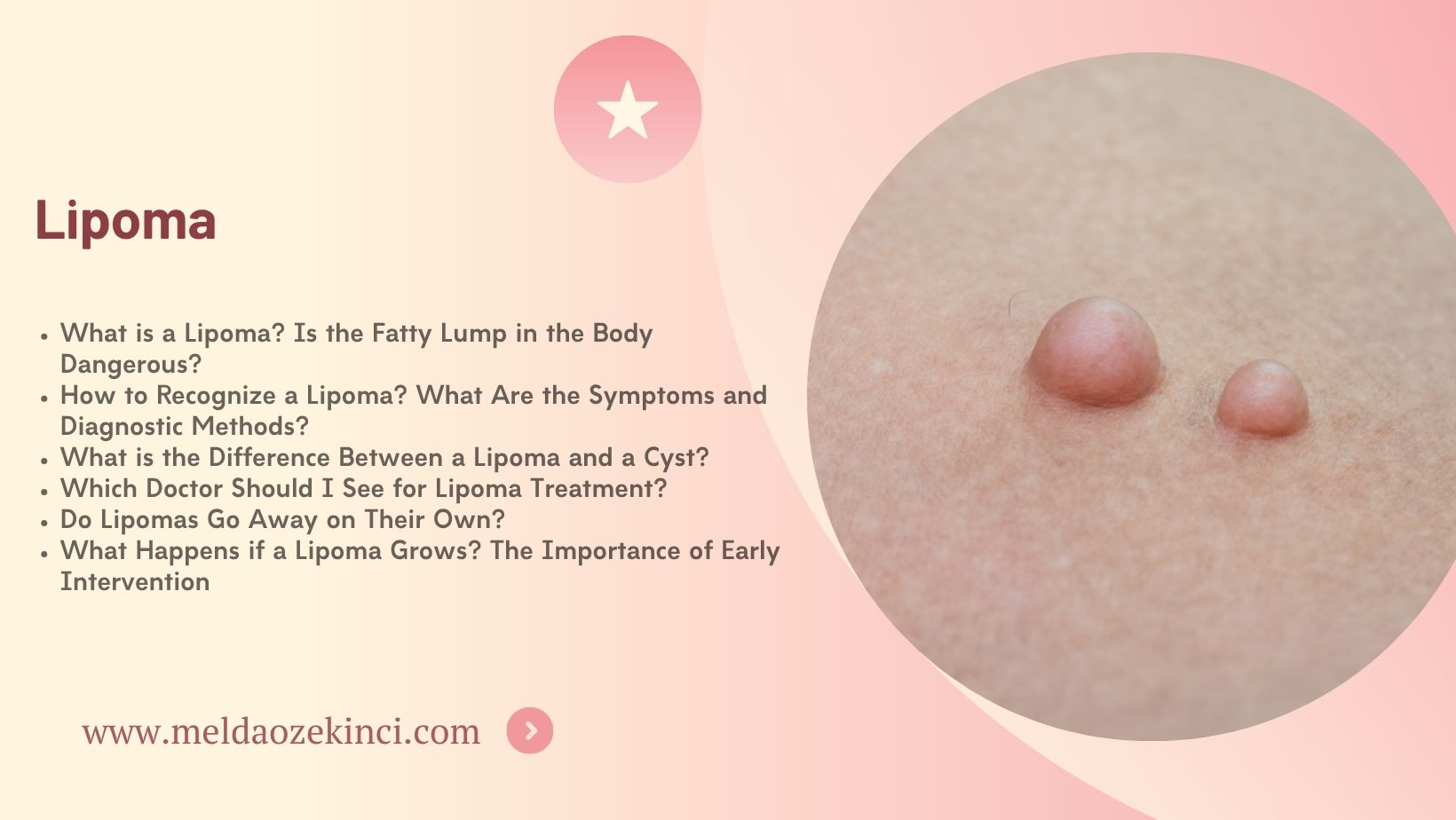

Table of Contents
- What is a Lipoma? Is the Fatty Lump in the Body Dangerous?
- How to Recognize a Lipoma? What Are the Symptoms and Diagnostic Methods?
- What is the Difference Between a Lipoma and a Cyst?
- Which Doctor Should I See for Lipoma Treatment?
- Do Lipomas Go Away on Their Own?
- What Happens if a Lipoma Grows? The Importance of Early Intervention
What is a Lipoma? Is the Fatty Lump in the Body Dangerous?
Lipoma is a type of fatty lump that usually forms under the skin and is generally harmless. It is one of the most common types of fatty lumps in the body. These masses are typically soft-textured, mobile, and painless. Based on the experiences of Dermatologist Specialist Dr. Melda Özekinci, lipomas generally do not pose a serious health risk but can cause discomfort depending on their size and location.
Body lipomas are most commonly seen on the upper back, neck, arms, and legs. These fatty lumps may be associated with genetic predisposition. Especially if there is a family history of lipomas, the risk of formation increases. In some cases, lipomas can also develop after trauma.
The most important characteristic of a lipoma is that it is usually benign. The risk of cancerous transformation is quite low. However, rapidly growing, hardening, or painful lumps require a dermatologist's examination. Dr. Melda Özekinci emphasizes the importance of advanced tests and, if necessary, planning surgical intervention in such cases.
Lipoma treatment depends on the patient's complaints and the size of the lipoma. Surgical removal is generally the preferred method. However, in some cases, minimally invasive methods such as liposuction may be applied. Since it is a benign tumor, the risk of recurrence after treatment is low, but follow-up is necessary.
Dermatologist Specialist Dr. Melda Özekinci stresses that lipomas are usually lumps that do not require worry and highlights the importance of regular check-ups. Especially when a subcutaneous fatty lump is noticed, consulting a specialist is critical for early diagnosis and treatment.
How to Recognize a Lipoma? What Are the Symptoms and Diagnostic Methods?
Lipoma is a soft and usually painless accumulation of fatty tissue under the skin. It can appear in various parts of the body and is generally harmless. However, it may cause discomfort due to its size or location. Lipoma symptoms usually present as a soft, mobile lump that can grow over time.
The answer to the question how to recognize a lipoma is mostly based on physical examination. Typically, a round or oval-shaped lump that slightly moves under the skin can be felt. If there is no pain or redness, it is most likely a lipoma. However, definitive diagnosis can be supported by imaging methods such as ultrasonography or MRI.
In the diagnostic process, expert physicians like Dermatologist Specialist Dr. Melda Özekinci perform detailed examinations and necessary imaging tests to make an accurate diagnosis. In some cases, lipomas can be confused with other lumps, so expert opinion is critically important.
Lipoma symptoms include slow growth of the lump, absence of pain, and no color change on the skin surface. However, if the lump grows rapidly, causes pain, or redness occurs around it, other diseases should be considered.
Diagnostic methods generally start with physical examination and may be supported by biopsy if needed. This helps differentiate from malignant tumors. Lipoma treatment is usually performed by surgical intervention. Recurrence risk after surgery is low and the patient's quality of life improves significantly.
What is the Difference Between a Lipoma and a Cyst?
Lipoma and cyst are two different soft tissue anomalies in the body. Knowing their differences is important because each requires different treatment methods.
Lipoma is generally a benign tumor originating from the body's fatty tissue. It is soft, mobile, and usually painless. Their sizes are mostly small but can grow. Lipomas are usually seen in the neck, back, arm, and leg areas and can be easily removed by surgical intervention.
On the other hand, cysts are closed sacs containing fluid, air, or semi-solid material. Cysts can be of different types and some can become infected. They sometimes cause pain and inflammation. Treatment methods vary depending on the type of cyst.
Another important difference is that lipoma generally consists of fat cells in the body, while cysts usually form as fluid-filled sacs under the skin or in organs. Lipomas are mobile and flexible, whereas cysts can be more fixed.
Dermatologist Specialist Dr. Melda Özekinci emphasizes the importance of correct diagnosis and treatment of lipomas and cysts. Incorrect diagnosis and treatment can cause problems to worsen and lead to complications. Therefore, examination by an expert dermatologist is important.
In conclusion, lipomas and cysts are different formations and require different treatment approaches. Early diagnosis, appropriate treatment, and expert supervision can prevent potential complications.
Which Doctor Should I See for Lipoma Treatment?
Lipoma is known as a benign fatty lump usually formed under the skin. It is mostly harmless but can grow and cause discomfort or aesthetic concerns. Therefore, it is important to consult the right specialist for lipoma treatment.
Many people wonder which doctor to see after being diagnosed with a lipoma. Initially, dermatologists usually conduct the evaluation. Expert physicians like Dermatologist Specialist Dr. Melda Özekinci examine the size and spread of the lipoma and determine the appropriate treatment method.
Surgical intervention is frequently preferred in lipoma treatment. Especially for large and bothersome lipomas, surgical removal is necessary. This procedure is generally performed by plastic surgeons or general surgeons. However, dermatological examination first is a critical step to manage the treatment process correctly.
Dermatologists can perform detailed examinations using imaging methods such as ultrasound according to the patient's condition and lipoma structure. This allows treatment to be planned individually. Thanks to the experience of Dr. Melda Özekinci, patients receive both accurate diagnosis and effective treatment services.
If the lipoma is small and painless, surgical intervention is not necessary and follow-up is recommended. However, early intervention becomes important in case of growth or pain. Therefore, the most appropriate doctor choice for lipoma treatment starts with dermatologists and, if needed, referrals to surgical specialists.
For effective and accurate treatment of lipomas, consulting experienced physicians like Dermatologist Specialist Dr. Melda Özekinci provides a great advantage for patients.
Do Lipomas Go Away on Their Own?
Lipoma is a type of lump known as a benign fatty lump that usually forms under the skin. Many people worry about whether lipomas disappear on their own. The truth is, lipomas generally do not shrink or disappear completely over time. Therefore, their presence is mostly permanent. However, their growth rate is quite slow and they usually do not pose a serious health threat.
Especially when their size increases or causes discomfort, treatment options may need to be considered. At this point, advice from expert physicians like Dermatologist Specialist Dr. Melda Özekinci is very valuable. Whether each lipoma is suitable for treatment depends on factors such as the patient's general condition and location of the fatty lump.
The natural course of lipomas rarely involves spontaneous shrinkage or disappearance. Therefore, these formations should not be neglected when noticed and proper expert control should be done. Especially rapidly growing or painful lipomas may indicate other diseases, so early diagnosis and treatment are very important.
Surgical intervention is generally preferred for lipoma treatment. However, surgery is not always mandatory; sometimes monitoring or minimally invasive methods may be applied. Dr. Melda Özekinci and her team develop personalized treatment plans to improve patients' quality of life.
Since the possibility of spontaneous lipoma disappearance is low, suspicious cases must be evaluated by a dermatologist. Accurate diagnosis and appropriate treatment are critical to prevent complications.
What Happens if a Lipoma Grows? The Importance of Early Intervention
Lipomas are benign fatty lumps formed in the body and are generally harmless. However, if a lipoma grows, it can cause discomfort both aesthetically and by pressing on surrounding tissues, leading to some problems. Therefore, the importance of early intervention is significant.
Expert dermatologists recommend evaluating surgical intervention or other treatment options if the size of the lipoma increases. Acting according to the recommendations of experienced dermatologists like Dr. Melda Özekinci is critical for patients to protect their health and avoid complications.
Symptoms of lipoma growth may include swelling, pain, and restricted movement. If these symptoms are observed, immediate consultation with a dermatology specialist is necessary. Because a growing lipoma may affect nerves and blood vessels, causing serious discomfort.
Thanks to early intervention, surgical removal of lipomas is usually a simple and quick procedure. The personalized treatment plans provided by Dr. Melda Özekinci accelerate recovery and improve patients' quality of life.
The best answer to the question what happens if a lipoma grows is timely intervention. Patients should consult specialist dermatologists whenever in doubt and follow appropriate treatment methods.





