 English


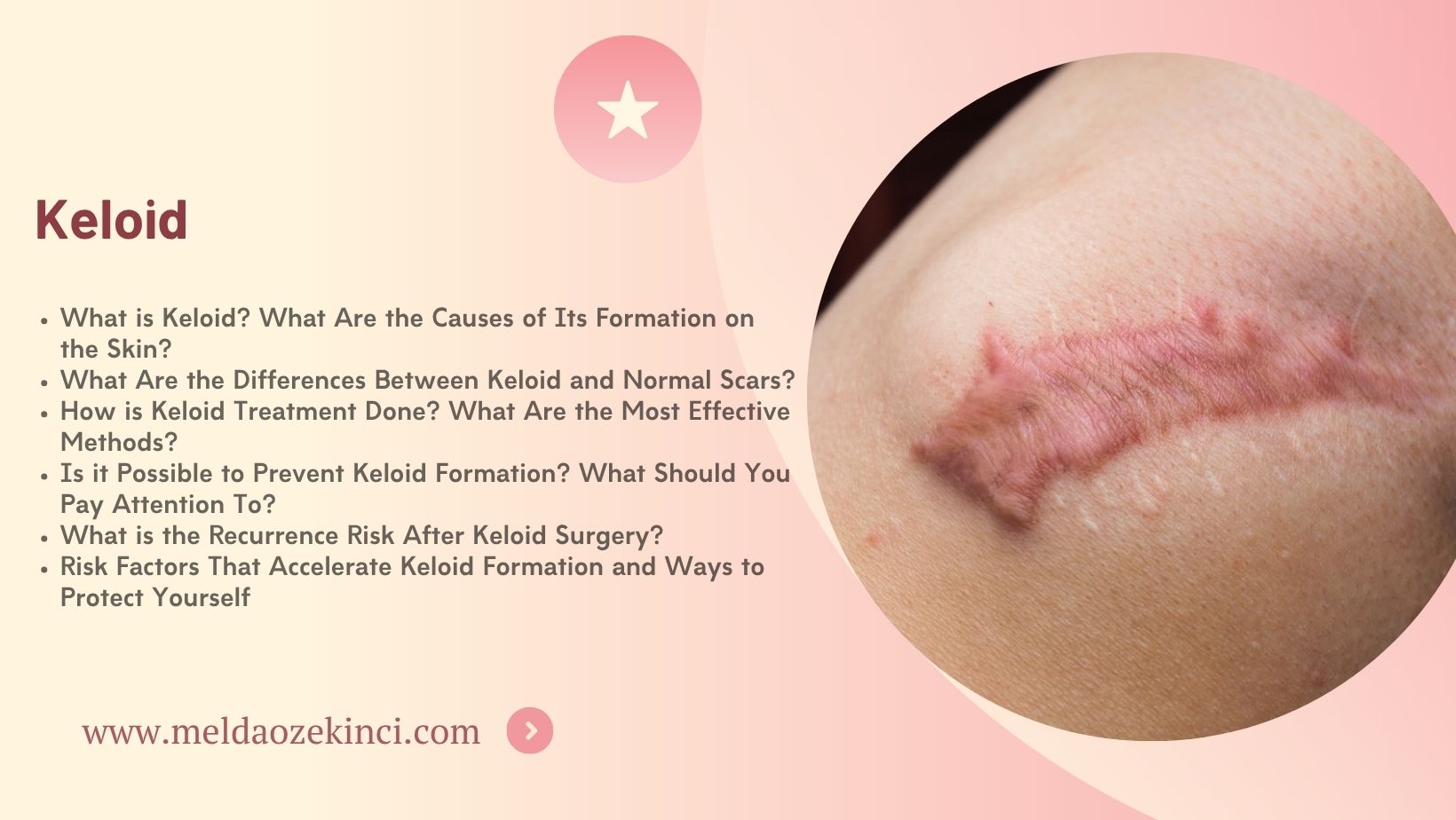

Table of Contents
- What is Keloid? What Are the Causes of Its Formation on the Skin?
- What Are the Differences Between Keloid and Normal Scars?
- How is Keloid Treatment Done? What Are the Most Effective Methods?
- Is it Possible to Prevent Keloid Formation? What Should You Pay Attention To?
- What is the Recurrence Risk After Keloid Surgery?
- Risk Factors That Accelerate Keloid Formation and Ways to Protect Yourself
What is Keloid? What Are the Causes of Its Formation on the Skin?
Keloid is a raised and permanent scar formed as an excessive response during the normal wound healing process on the skin. Dermatologist Specialist Dr. Melda Özekinci explains the causes of keloid formation and treatment methods in detail.
Keloid formation depends on many factors such as genetics, skin type, and wound care. It is especially more common in people with darker skin. Specialist Dr. Melda Özekinci stresses the importance of early intervention in this regard.
Keloids typically appear after cuts, surgical procedures, burns, or acne scars. Due to excessive collagen production, more tissue accumulates than normal in the wound area, creating a raised appearance. There are various methods for keloid treatment.
Specialist Dr. Melda Özekinci recommends methods such as corticosteroid injections, laser applications, and silicone gel for treating keloids. The treatment process requires patience and must be personalized.
Early diagnosis and correct treatment can prevent keloid formation. Specialist Dr. Melda Özekinci notes that proper wound care and skin protection reduce the risk of keloids.
What Are the Differences Between Keloid and Normal Scars?
Keloid and normal scars are two different tissue types formed after skin injury. Dermatologist Specialist Dr. Melda Özekinci explains the main differences and treatment approaches between these two conditions.
Normal scars are flat and usually light-colored tissues remaining on the skin after wound healing. These scars are part of the body's natural healing process and tend to fade over time. Specialist Dr. Melda Özekinci states that normal scars are usually painless and do not exhibit swelling.
Keloids, on the other hand, are raised and hard tissues that extend beyond the wound boundaries due to excessive collagen production. These scars can grow and sometimes cause itching or pain. Specialist Dr. Melda Özekinci emphasizes that keloids are more common in people with genetic predisposition.
Treating keloids is more difficult than normal scars and requires various methods. Corticosteroid injections, laser treatment, and silicone gel applications are common methods. Specialist Dr. Melda Özekinci says personalized treatment plans are key to success.
Understanding the differences between keloids and normal scars is important for determining the correct treatment methods. Specialist Dr. Melda Özekinci’s experience ensures patients reach the best solutions.
How is Keloid Treatment Done? What Are the Most Effective Methods?
Keloid treatment is performed through various methods to reduce raised scar tissue and improve appearance. Dermatologist Specialist Dr. Melda Özekinci offers personalized solutions for effective keloid treatment.
First, corticosteroid injections are commonly used to shrink keloid tissue and reduce inflammation. Specialist Dr. Melda Özekinci notes this method has positive effects on patients.
Laser treatment is also an effective method for improving the appearance of keloids. Laser beams inhibit excess collagen production and help flatten scars. Specialist Dr. Melda Özekinci highlights that laser treatment has minimal side effects.
Silicone gel and adhesive tapes are practical home-use solutions to soften and reduce keloids. Specialist Dr. Melda Özekinci states that regular use increases treatment success.
Additionally, surgical interventions may be preferred in some cases. However, since there is a risk of keloid recurrence after surgery, Specialist Dr. Melda Özekinci advises careful planning of surgery.
Is it Possible to Prevent Keloid Formation? What Should You Pay Attention To?
Preventing keloid formation is an important topic to consider during the wound healing process. Dermatologist Specialist Dr. Melda Özekinci states that early intervention and proper care are critical in reducing keloid risk.
First, paying attention to wound cleanliness and hygiene is essential. Increased infection risk can cause the body to produce excess collagen, laying the groundwork for keloid formation. Specialist Dr. Melda Özekinci carefully conveys her recommendations on wound care to patients.
Protecting the injured area is also important. Hard impacts or unnecessary friction negatively affect healing. Using personal care products and wound dressings can reduce this risk.
Genetic predisposition is among the factors increasing the keloid risk. Therefore, individuals prone to keloid formation should be more careful about scars. Specialist Dr. Melda Özekinci recommends regular dermatological checks for these patients.
If surgery is necessary, correct postoperative care and follow-up are mandatory. Specialist Dr. Melda Özekinci emphasizes the importance of wound care to patients, aiming to minimize keloid risk.
What is the Recurrence Risk After Keloid Surgery?
Keloid surgery recurrence risk is one of the most frequently asked questions by patients. Dermatologist Specialist Dr. Melda Özekinci states that postoperative care and treatment significantly affect the likelihood of recurrence.
Even if the keloid tissue is removed surgically, the body's tendency to produce excess collagen may continue. Therefore, keloid recurrence risk always exists. Specialist Dr. Melda Özekinci stresses the necessity of regular follow-up and appropriate care after surgery.
To reduce recurrence risk, corticosteroid injections are often applied postoperatively. This method helps prevent new keloid formation. Additionally, laser treatment and silicone gel applications are supportive treatment options.
Specialist Dr. Melda Özekinci explains that patients' attention to wound care after surgery reduces infection risk, which lowers recurrence probability. Genetic factors also have an effect on recurrence, she adds.
Although recurrence risk after keloid surgery cannot be completely eliminated, it can be largely controlled with proper treatment and care. Specialist Dr. Melda Özekinci states that conscious behavior of patients increases success.
Risk Factors That Accelerate Keloid Formation and Ways to Protect Yourself
Risk factors accelerating keloid formation play an important role during wound healing. Dermatologist Specialist Dr. Melda Özekinci emphasizes that knowing these factors is critical for developing effective protection methods.
Firstly, genetic predisposition is one of the main reasons that increase keloid risk. Individuals with family history of keloids react to injuries by producing excessive collagen. In such cases, wound care and follow-up must be much more careful. Specialist Dr. Melda Özekinci provides special recommendations to patients in this regard, aiming to minimize keloid development.
Infection risk is also an important factor that accelerates keloid formation. Poor wound hygiene and lack of cleanliness make the healing process difficult. Inflammation increases around infected wounds, laying the groundwork for keloid formation. Specialist Dr. Melda Özekinci highlights the importance of following hygiene rules during wound care.
Pressure, friction, and trauma applied to the wound area are also among the risk factors. Especially tight clothing and mechanical irritation negatively affect healing and trigger keloid development. Specialist Dr. Melda Özekinci emphasizes the importance of protecting the wound area and avoiding unnecessary pressure.
Hormonal changes and immune system imbalances can also accelerate keloid formation. Therefore, extra care in wound treatment is required especially during pregnancy and adolescence. Specialist Dr. Melda Özekinci recommends her patients to have regular dermatological checks during these periods.
Prevention methods include regular wound care, reducing infection risk, and early intervention. Specialist Dr. Melda Özekinci’s experience shows that treatment and care applied in the early stages significantly prevent keloid development.





