 English


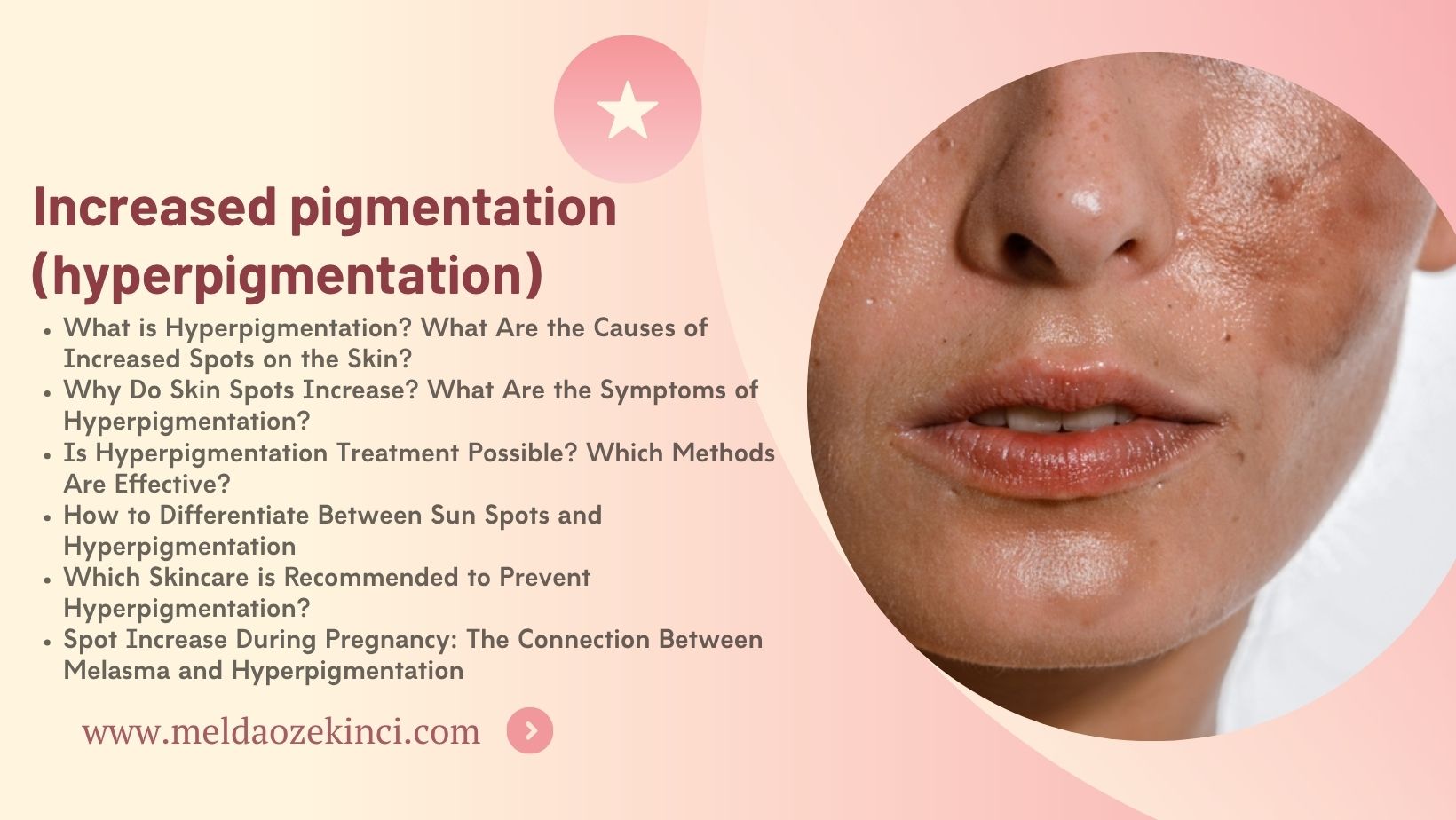

Table of Contents
- What is Hyperpigmentation? What Are the Causes of Increased Spots on the Skin?
- Why Do Skin Spots Increase? What Are the Symptoms of Hyperpigmentation?
- Is Hyperpigmentation Treatment Possible? Which Methods Are Effective?
- How to Differentiate Between Sun Spots and Hyperpigmentation
- Which Skincare is Recommended to Prevent Hyperpigmentation?
- Spot Increase During Pregnancy: The Connection Between Melasma and Hyperpigmentation
What is Hyperpigmentation? What Are the Causes of Increased Spots on the Skin?
Hyperpigmentation refers to dark spots caused by an accumulation of melanin in the skin beyond normal levels. This condition can lead to uneven skin tone and aesthetic problems. Dermatologist Specialist Dr. Melda Özekinci informs her patients about the causes of hyperpigmentation and provides appropriate treatment methods.
The most common causes of hyperpigmentation include excessive exposure to sunlight, hormonal changes, and inflammatory processes in the skin. Especially pregnancy and the use of birth control pills can trigger hormonal changes that cause increased spots on the skin.
Post-inflammatory hyperpigmentation, which occurs after skin damage, is characterized by pigment accumulation following scars or acne. Specialist Dr. Melda Özekinci states that laser, chemical peeling, and topical products are effective in treating these types of spots.
Accurate diagnosis and regular follow-up are very important in the treatment of hyperpigmentation. Specialist Dr. Melda Özekinci applies personalized treatment plans according to the patient's skin type and the nature of the spots. She also advises not to neglect the use of sunscreen and skincare recommendations.
The causes of increased spots on the skin are very diverse and the treatment process requires patience. The experience of Dermatologist Specialist Dr. Melda Özekinci plays a critical role in helping patients achieve healthy and flawless skin.
Why Do Skin Spots Increase? What Are the Symptoms of Hyperpigmentation?
The question of why skin spots increase is a common problem many people face. Dermatologist Specialist Dr. Melda Özekinci explains the reasons for the increase in spots in detail and offers effective solutions.
Hyperpigmentation appears as dark-colored spots caused by increased melanin production in the skin. This condition can increase due to many factors such as genetic factors, sunlight, hormonal changes, and inflammations in the skin.
Especially UV rays trigger melanin production in the skin, leading to increased skin spots. Therefore, the use of sunscreen and sun protection methods are very important. Specialist Dr. Melda Özekinci recommends her patients to regularly use sunscreen.
Symptoms of hyperpigmentation include irregular and dark-colored spots on the skin. These spots can grow and spread over time. Specialist Dr. Melda Özekinci states that early diagnosis and treatment can control these spots.
Hormonal changes, especially during pregnancy, birth control pill use, and menopause, can cause an increase in hyperpigmentation. Also, post-inflammatory hyperpigmentation, which develops after skin inflammations or scars, is an important factor.
Specialist Dr. Melda Özekinci prepares personalized treatment plans according to each patient's skin structure and spot type. Proper care and protection can prevent the increase in skin spots and existing spots can be treated.
Is Hyperpigmentation Treatment Possible? Which Methods Are Effective?
Hyperpigmentation treatment is an important topic for removing skin spots and evening out skin tone. Dermatologist Specialist Dr. Melda Özekinci offers effective and personalized treatment methods to help patients overcome this problem.
Hyperpigmentation is characterized by dark spots formed due to irregular increases in melanin production in the skin. Treatment methods vary depending on the type, depth, and skin type of the spots. Specialist Dr. Melda Özekinci determines the most suitable treatment plan considering patient expectations.
One of the most common treatment methods is laser treatment. Laser targets excess pigment in the skin and lightens the spots. With Dr. Melda Özekinci’s clinical experience, laser applications provide safe and effective results.
Chemical peeling removes the outer layer of the skin, promoting the formation of new and healthy cells. This method reduces the appearance of hyperpigmentation and makes the skin brighter. However, sun protection during treatment is critically important.
Topical creams and serums are also frequently used in hyperpigmentation treatment. Ingredients like acids, vitamin C, and hydroquinone help reduce melanin production. Specialist Dr. Melda Özekinci recommends regular and controlled use of these products.
Specialist Dr. Melda Özekinci emphasizes the importance of discipline and patience in every patient’s treatment. The treatment process can take time, but permanent results can be achieved with the right methods.
How to Differentiate Between Sun Spots and Hyperpigmentation
Sun spots and hyperpigmentation look similar as dark spots on the skin but have different causes. Dermatologist Specialist Dr. Melda Özekinci explains how to distinguish these two conditions and emphasizes the importance of the correct treatment approach.
Sun spots are melanin accumulations in the upper layer of the skin due to prolonged sun exposure. These spots are mostly seen on areas most exposed to the sun like the face, neck, and hands. Dr. Melda Özekinci states these spots generally have irregular borders and can darken over time.
Hyperpigmentation is a general term for irregular and excessive melanin production. Although sun spots are a type of hyperpigmentation, this condition can also appear due to hormonal changes, skin inflammations, or injuries.
Sun spots are usually flat and limited in area, while hyperpigmentation spots can be more widespread and irregularly distributed. Dr. Melda Özekinci mentions that correct diagnosis may require skin examination, dermatoscopy, and sometimes biopsy.
Early intervention is very important in both cases. Dr. Melda Özekinci notes that regular use of sunscreen, laser treatment, and topical products achieve effective results. She also emphasizes that personalized treatment plans play a critical role in success.
Which Skincare is Recommended to Prevent Hyperpigmentation?
Preventing hyperpigmentation is a critical step to protect skin health and prevent the formation of spots. Dermatologist Specialist Dr. Melda Özekinci offers effective skincare recommendations to help patients achieve healthy skin.
First of all, using sunscreen is one of the most important methods to prevent hyperpigmentation. UV rays increase melanin production in the skin, creating a ground for spots to form. Dr. Melda Özekinci advises applying sunscreen daily, especially before going outside.
Regular skin cleansing prevents pore clogging and supports skin health. Gentle cleansers should be preferred to reduce hyperpigmentation risk. Dr. Melda Özekinci stresses the importance of choosing products suitable for the skin type.
Moisturizing strengthens the skin’s barrier function and protects against external factors. Dry skin is more prone to spot formation. Therefore, skincare should be supported with appropriate moisturizers.
Peeling applications speed up skin renewal by removing dead skin cells. However, excessive peeling can cause irritation, so it should be done under expert supervision. Dr. Melda Özekinci highlights the importance of doing peeling treatments in the right dosage and frequency.
Healthy nutrition and plenty of water consumption also positively contribute to skin health. Dr. Melda Özekinci points out that skincare needs to be supported not only externally but also internally.
Spot Increase During Pregnancy: The Connection Between Melasma and Hyperpigmentation
Spot increase during pregnancy is a common problem many women face. Especially melasma and hyperpigmentation become more prominent during this period. Dermatologist Specialist Dr. Melda Özekinci provides important information about the causes and treatment methods of this condition.
Melasma is defined as dark spots caused by increased melanin production in the skin due to hormonal effects during pregnancy. It is usually seen in the facial area, especially on the forehead, cheeks, and upper lip. Dr. Melda Özekinci emphasizes that melasma is temporary but regular care is important.
Hyperpigmentation differs from melasma in that irregular and permanent spots form on the skin for various reasons. Hormonal changes during pregnancy, exposure to sunlight, and genetic factors increase the risk of hyperpigmentation.
To prevent and treat spot increase during pregnancy, Dr. Melda Özekinci recommends regular use of sunscreen and not neglecting skincare. Also, the use of moisturizers and repairing products suitable for the skin type is important.
In the treatment of melasma and hyperpigmentation, laser therapy and topical creams can be effective after pregnancy. Thanks to Dr. Melda Özekinci’s experience, patients can achieve healthy skin with safe and personalized solutions.





