 English


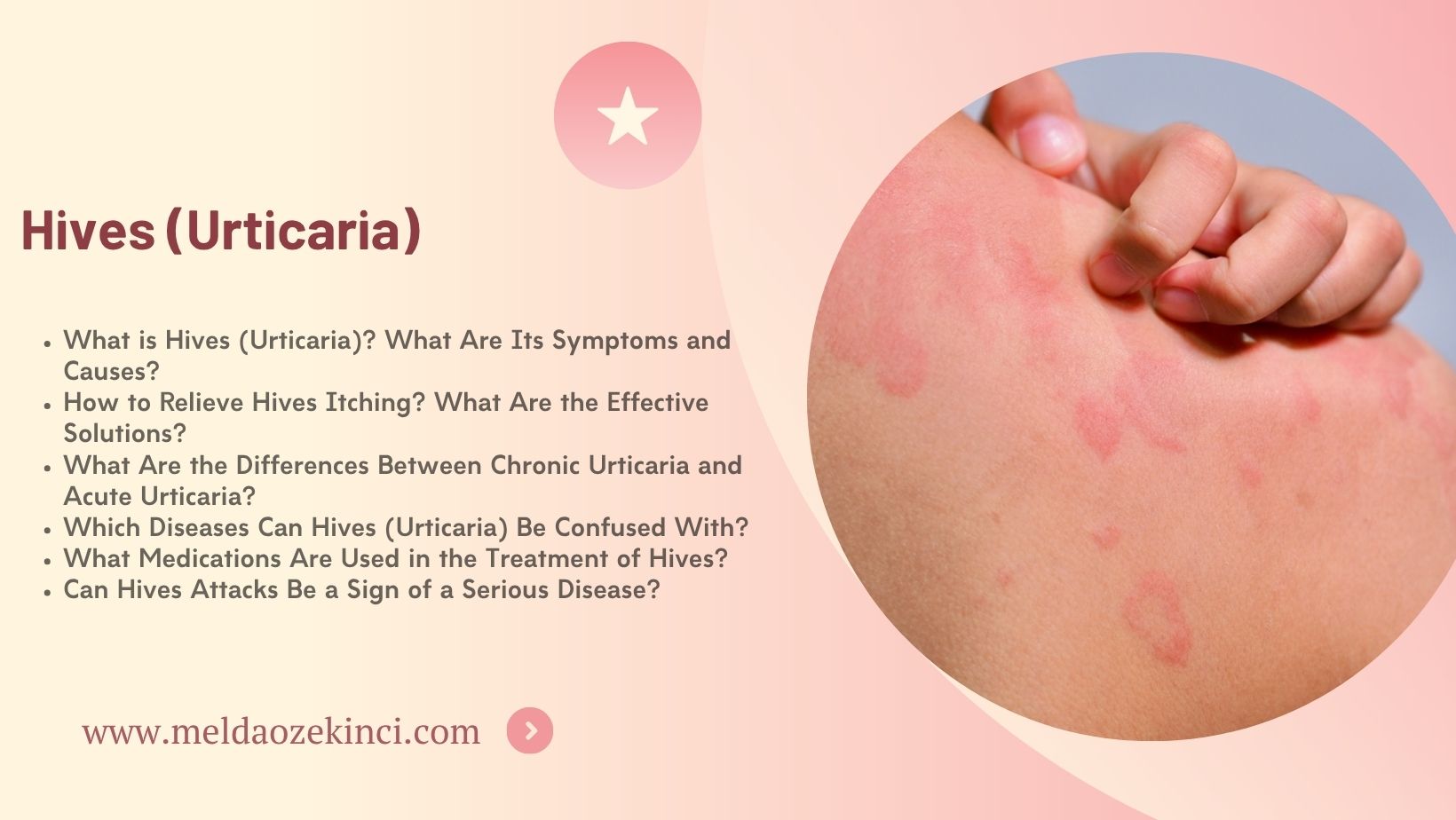

Table of Contents
- What is Hives (Urticaria)? What Are Its Symptoms and Causes?
- How to Relieve Hives Itching? What Are the Effective Solutions?
- What Are the Differences Between Chronic Urticaria and Acute Urticaria?
- Which Diseases Can Hives (Urticaria) Be Confused With?
- What Medications Are Used in the Treatment of Hives?
- Can Hives Attacks Be a Sign of a Serious Disease?
What is Hives (Urticaria)? What Are Its Symptoms and Causes?
Hives, or medically called urticaria, is a skin reaction characterized by sudden itchy and red raised bumps. Dermatologist Specialist Dr. Melda Özekinci provides comprehensive information to her patients about hives symptoms and causes, guiding them towards accurate diagnosis and treatment.
Symptoms of hives usually appear as sudden, raised, red spots on the skin. These lesions cause itching and sometimes a burning sensation. Lesions may disappear on their own within a few hours to a few days and reappear in different areas.
Causes of hives can be quite varied. Allergic reactions, infections, stress, and some medications are the most common triggers. Specialist Dr. Melda Özekinci emphasizes that correctly identifying the underlying causes is critical for successful treatment.
Urticaria can sometimes become chronic and reduce quality of life. Therefore, regular follow-up and an appropriate treatment plan are essential. The personalized treatment methods applied by Specialist Dr. Melda Özekinci are effective in controlling the disease.
When hives symptoms appear, early diagnosis and intervention by a specialist dermatologist is necessary.
How to Relieve Hives Itching? What Are the Effective Solutions?
Hives itching is one of the most common complaints of patients and can seriously affect quality of life. Dermatologist Specialist Dr. Melda Özekinci offers many effective solution suggestions to the question how to relieve hives itching.
Hives usually appears as sudden red and raised rashes on the skin. These rashes cause intense itching and discomfort in patients. Specialist Dr. Melda Özekinci recommends first identifying the underlying cause to control the itching.
To relieve hives itching, antihistamines are the most commonly used drug group. These medications block histamine release in the body, reducing itching. However, lifestyle changes by patients are also important alongside medication.
Specialist Dr. Melda Özekinci states that especially stress management and proper skin care are effective in reducing the severity of hives itching. Also, avoiding allergens and factors that irritate the skin is necessary.
Natural solutions include applying cold compresses to help relieve itching. Additionally, using moisturizers strengthens the skin barrier and reduces discomfort. However, since each patient's condition is different, Specialist Dr. Melda Özekinci’s personalized recommendations always take priority.
What Are the Differences Between Chronic Urticaria and Acute Urticaria?
Urticaria, commonly known as a skin disorder, has two main types: chronic urticaria and acute urticaria. Dermatologist Specialist Dr. Melda Özekinci explains the differences and treatment approaches between these two types in detail to her patients.
Acute urticaria is characterized by suddenly developing skin rashes lasting from a few days up to six weeks. This type usually appears after allergic reactions, infections, or drug use. Lesions can be itchy, red, and raised. Specialist Dr. Melda Özekinci states that short-term antihistamine therapy is generally applied in acute urticaria cases.
Chronic urticaria, on the other hand, shows itself with recurrent rashes and itching lasting longer than six weeks. The cause is usually not fully identified, which complicates treatment. Specialist Dr. Melda Özekinci develops personalized treatment plans to improve the quality of life of patients in chronic cases.
The main differences include duration and the diversity of triggers between acute and chronic urticaria. Acute is usually linked to a specific allergen, while chronic urticaria has a more complex cause. Therefore, regular follow-up and comprehensive examination are important.
Specialist Dr. Melda Özekinci emphasizes that in both types, the patient's lifestyle and stress management are important during the treatment process. Symptoms should be carefully monitored and treatment methods updated when necessary.
Which Diseases Can Hives (Urticaria) Be Confused With?
Hives, or also called urticaria, is known for sudden itchy and red bumps appearing on the skin. However, hives symptoms can sometimes be confused with other diseases. Dermatologist Specialist Dr. Melda Özekinci emphasizes the importance of accurate diagnosis.
Urticaria is usually caused by allergic reactions, but sometimes it may resemble skin infections, eczema, or autoimmune diseases like lupus. Therefore, knowing which diseases can be confused with hives is critical for correct treatment.
Especially in chronic urticaria cases, detailed examination is required. Specialist Dr. Melda Özekinci recommends advanced tests such as dermatoscopy and blood tests to achieve an accurate diagnosis.
Other diseases that can be confused with hives include contact dermatitis, atopic dermatitis, and some drug reactions. Rarely, early stages of skin cancer may present similar appearances.
Specialist Dr. Melda Özekinci advises patients to be examined by specialists to avoid misdiagnosis and incorrect treatment.
What Medications Are Used in the Treatment of Hives?
Hives, or medically called urticaria, is a common skin disorder characterized by sudden itchy and red bumps on the skin. However, hives symptoms can sometimes be confused with other diseases. Dermatologist Specialist Dr. Melda Özekinci emphasizes the importance of accurate diagnosis and treatment.
Hives is mostly caused by allergies, but there are many other diseases with similar symptoms. These include eczema, contact dermatitis, psoriasis, and lupus autoimmune diseases. When confused with hives, incorrect treatment may be applied, so specialist supervision is necessary.
Diagnosis of urticaria is based on medical history and physical examination. Specialist Dr. Melda Özekinci uses specific tests such as dermatoscopy and blood tests to differentiate from other skin diseases.
Sometimes hives symptoms may resemble skin infections or drug reactions. In chronic cases, the cause must be identified. Specialist Dr. Melda Özekinci develops personalized treatment plans for her patients.
Additionally, early stages of skin cancer or lymphoma may sometimes show symptoms similar to urticaria. Therefore, specialist consultation and additional tests are necessary for prolonged and recurring cases.
The question of which diseases hives can be confused with covers a wide range. Specialist Dr. Melda Özekinci ensures correct diagnosis to prevent unnecessary treatments and complications, playing a leading role in protecting her patients' skin health.
Can Hives Attacks Be a Sign of a Serious Disease?
Hives attacks are often harmless and temporary, but sometimes they can signal more serious health issues. Dermatologist Specialist Dr. Melda Özekinci advises patients to be careful and responsible when answering the question can hives attacks be a sign of a serious disease.
Hives is generally caused by allergic reactions and presents as itchy, red raised bumps on the skin. However, repeated or chronic attacks may indicate autoimmune diseases or immune system disorders. Specialist Dr. Melda Özekinci stresses the need for thorough examination in such cases.
Hives attacks can be associated with thyroid diseases, lupus, or some types of cancer. Therefore, if the frequency and severity of attacks increase, evaluation by a specialist dermatologist is essential.
Specialist Dr. Melda Özekinci recommends her patients undergo blood tests, biopsies, and other advanced diagnostics to accurately identify the causes. Early diagnosis is a key step for successful treatment and prevention of serious diseases.
Hives attacks are not always a simple skin reaction, so dermatological evaluation should not be neglected in repeated or severe attacks.





