English


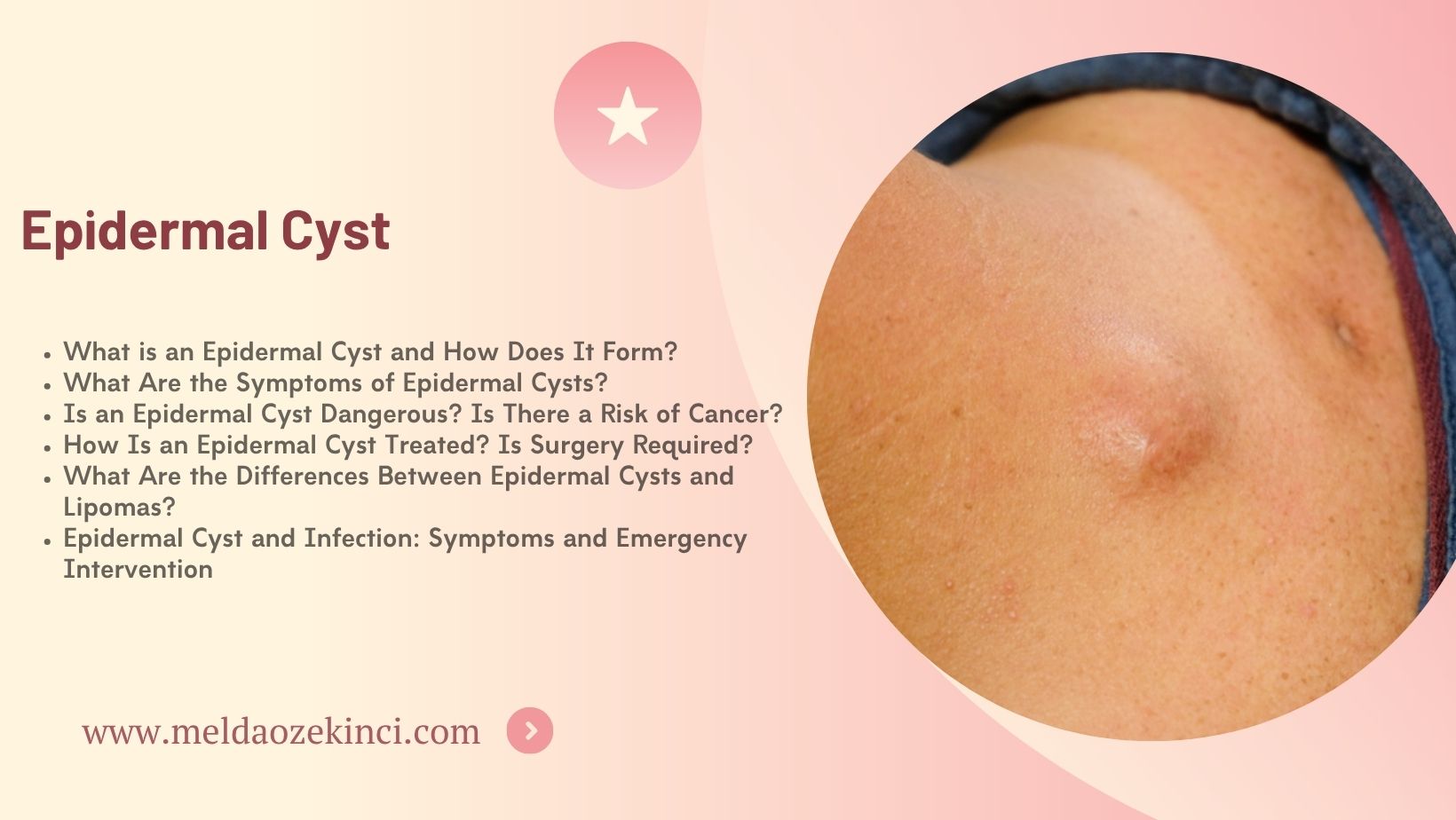

Table of Contents
- What is an Epidermal Cyst and How Does It Form?
- What Are the Symptoms of Epidermal Cysts?
- Is an Epidermal Cyst Dangerous? Is There a Risk of Cancer?
- How Is an Epidermal Cyst Treated? Is Surgery Required?
- What Are the Differences Between Epidermal Cysts and Lipomas?
- Epidermal Cyst and Infection: Symptoms and Emergency Intervention
- Frequently Asked Questions
What is an Epidermal Cyst and How Does It Form?
Epidermal cyst is one of the common benign masses on the skin. According to Dermatologist Specialist Dr. Melda Özekinci’s explanations, these cysts usually form due to abnormal accumulation of cells in the upper layer of the skin.
The formation mechanism of epidermal cysts begins with keratin cells located on the skin surface being trapped inside the cyst. This causes accumulation of keratin and oily substances inside the cyst.
Specialist Dr. Melda Özekinci states that these cysts are generally slow-growing and painless. However, sometimes they can get infected and inflamed, which can cause pain and redness.
Skin trauma, irritation after shaving, and some genetic factors play a role in the formation of epidermal cysts. Especially blockage of hair follicles during shaving can create a basis for cyst formation.
The dermatologist emphasizes that the diagnosis of epidermal cysts is generally made through physical examination, but imaging methods such as ultrasound can be used if necessary.
Treatment options include surgical removal of the cyst, which is the most effective method. The specialist points out that appropriate surgical intervention minimizes the risk of recurrence.
What Are the Symptoms of Epidermal Cysts?
Epidermal cysts are masses that form on the skin and are usually benign. According to the dermatologist, early detection of these cysts facilitates the treatment process.
Symptoms of epidermal cysts are mostly simple; however, knowing these symptoms well is necessary for accurate diagnosis. Firstly, a round and movable lump forms under the skin. This mass is generally painless and grows slowly.
Sometimes epidermal cysts can become infected. In this case, redness, swelling, and pain appear in the cyst area. The specialist emphasizes the importance of professional intervention in treating infected cysts.
In some cases, cysts may be filled with fluid and sensitive to pressure. Also, sometimes a small hole or dot appears on the cyst, which indicates the channel opening to the skin.
According to the dermatologist, although most epidermal cysts are harmless, any complaints of rapid growth or pain should be checked by a dermatologist.
Is an Epidermal Cyst Dangerous? Is There a Risk of Cancer?
Epidermal cysts are generally benign and slow-growing masses under the skin. Thanks to the experience of the dermatologist, the diagnosis and treatment process of these cysts is managed quite reliably. So, are epidermal cysts dangerous and do they carry a cancer risk?
Firstly, it should be noted that epidermal cysts are mostly benign. These cysts form when cells from the upper layer of the skin migrate beneath the skin and accumulate a substance called keratin inside. They often cause no symptoms and usually do not create any problems on their own.
However, if epidermal cysts are neglected for a long time or become infected, they can cause complaints such as inflammation and pain. The specialist stresses the importance of early intervention in such cases because if left untreated, the cyst may grow and damage surrounding tissues, increasing the risk of complications.
Rarely, a risk of cancer may arise in epidermal cysts. This is a very low probability situation and is generally related to leaving the cyst untreated for a long time. Early signs of malignancy include rapid growth of the cyst, color change, or hardening of the tissue. In such cases, dermatological examination is mandatory.
The dermatologist always emphasizes the necessity of regular skin checks for the reliable management of epidermal cysts. Expert supervision minimizes potential risks and keeps patients away from unnecessary worries.
Treatment options generally involve surgical removal of the cyst. When performed by experienced dermatologists, this procedure yields quite successful results and reduces the risk of recurrence. Also, antibiotic treatment may be necessary for infected cysts.
Epidermal cysts usually do not cause serious problems. However, any changes or complaints should lead to consulting experts like The dermatologist, who plays a critical role in maintaining patients’ skin health. This way, cyst complications are prevented and patients regain healthy skin.
How Is an Epidermal Cyst Treated? Is Surgery Required?
Epidermal cysts are small capsules that form on the skin and are usually harmless. However, treatment may be necessary due to growth, infection, or cosmetic concerns. So, how is an epidermal cyst treated and does it require surgery? We seek answers to these questions with the experience of the dermatologist.
Initially, treatment of epidermal cysts mostly depends on symptoms and the cyst’s condition. Small and asymptomatic cysts usually do not require intervention; regular monitoring is sufficient. However, if the cyst grows, becomes painful, or infected, treatment becomes necessary. At this point, the first step recommended by the dermatologist is proper evaluation of the cyst.
Treatment methods include surgical intervention, which is the most effective. The cyst is completely removed under local anesthesia. Surgical procedure is preferred as it minimizes the risk of recurrence. Surgeries performed with the experience of the doctor prioritize patient comfort and are done to leave minimal scarring.
Precautions against infection risk are taken before and after surgery. In infected cysts, antibiotic treatment may be applied first to control inflammation, followed by surgical procedure. This two-step approach prevents complications and speeds healing.
In some cases, anti-inflammatory and painkiller treatments can alleviate symptoms as alternatives to surgery. However, these methods do not provide permanent solutions and only offer temporary relief. Therefore, surgical removal is recommended when a definitive cure is needed.
Epidermal cyst treatment varies depending on the individual case, but small asymptomatic cysts may only need monitoring, while symptomatic, growing, or recurrent cysts are usually removed surgically. Surgical procedures performed by experienced hands are the safest method both health-wise and cosmetically. This process can be completed easily and successfully with the professional approach of the dermatologist.
What Are the Differences Between Epidermal Cysts and Lipomas?
Epidermal cysts and lipomas are often confused but are completely different skin problems. Although both are masses formed under the skin, they differ in structure, causes of formation, and treatment processes. Let’s examine these differences in detail with the expertise of the dermatologist.
Firstly, epidermal cysts are keratin-filled capsules originating from the upper layer of the skin. They usually grow slowly, appear as slightly raised lumps on the surface, and sometimes can become infected. They can cause pain or redness. The doctor emphasizes that epidermal cysts are usually harmless but carry a risk of infection.
On the other hand, lipomas appear as soft, movable lumps caused by abnormal growth of fatty tissue. Lipomas are generally painless and located in deeper tissues. Their sizes may vary but they are usually harmless. According to the dermatologist, lipomas may be influenced by genetic and metabolic factors.
In terms of treatment, epidermal cysts may require surgery if infected. The surgical procedure usually involves complete removal of the cyst and reduces the risk of recurrence. Lipoma treatment is generally applied when there are cosmetic concerns or functional problems. The doctor states that expert evaluation is essential in both cases.
The main difference between epidermal cysts and lipomas is that one is a keratin-filled capsule, while the other is a soft mass made up of fatty tissue. These differences are also decisive in treatment and follow-up processes. Accurate diagnosis and treatment can be provided with the experience of the dermatologist.
Epidermal Cyst and Infection: Symptoms and Emergency Intervention
Epidermal cysts are benign masses frequently seen under the skin. However, sometimes these cysts can become infected and cause serious problems. According to the dermatologist, recognizing symptoms of infected epidermal cysts correctly and quick intervention are very important.
An infected epidermal cyst starts with mild redness and swelling. Then pain, increased heat, and sometimes abscess formation are observed. The skin around the cyst becomes sensitive, and sometimes purulent discharge appears. These symptoms indicate that the cyst is infected and definitely require dermatological evaluation.
The dermatologist stresses the importance of early diagnosis in infected epidermal cysts. Antibiotic treatment prevents spread of the infection, while surgical intervention may be needed. During surgery, complete removal of the cyst prevents recurrence of infection and provides a permanent solution.
In cases requiring emergency intervention, sudden enlargement of the cyst, severe pain, and high fever may occur as systemic symptoms. In such cases, patients must consult a specialist dermatologist without delay. The doctor’s clinic offers comprehensive and reliable treatment options for epidermal cyst infections.
Observing symptoms and prompt intervention in infected epidermal cysts is critically important to prevent complications. With proper treatment by experts, patients can regain healthy skin in a short time.
Frequently Asked Questions
Does an epidermal cyst go away on its own?
An epidermal cyst usually does not disappear completely on its own. As long as the cyst wall remains, it can fill up again over time. A temporary shrinkage may occur during an infection, but this does not mean a permanent cure.
Should an epidermal cyst be squeezed at home?
No. Squeezing at home increases the risk of infection, permanent scarring, and recurrence. Because the cyst wall is not removed, the problem often becomes worse. Seeing a dermatologist is the safest option for a bothersome cyst.
Is cyst removal painful, and does it leave a scar?
The procedure is performed under local anesthesia, so no pain is felt during it. A small scar may remain depending on the location and size of the incision; with proper technique and aftercare, it usually fades over time.
When should I see a doctor without delay?
See a dermatologist if the cyst grows quickly or if you notice redness, increased warmth, severe pain, pus discharge, color change, or fever.
Can the cyst come back after treatment?
When the cyst wall is completely removed, the chance of recurrence is low. However, a new cyst may develop in the same or another area, so follow-up checks after the procedure are important.