 English


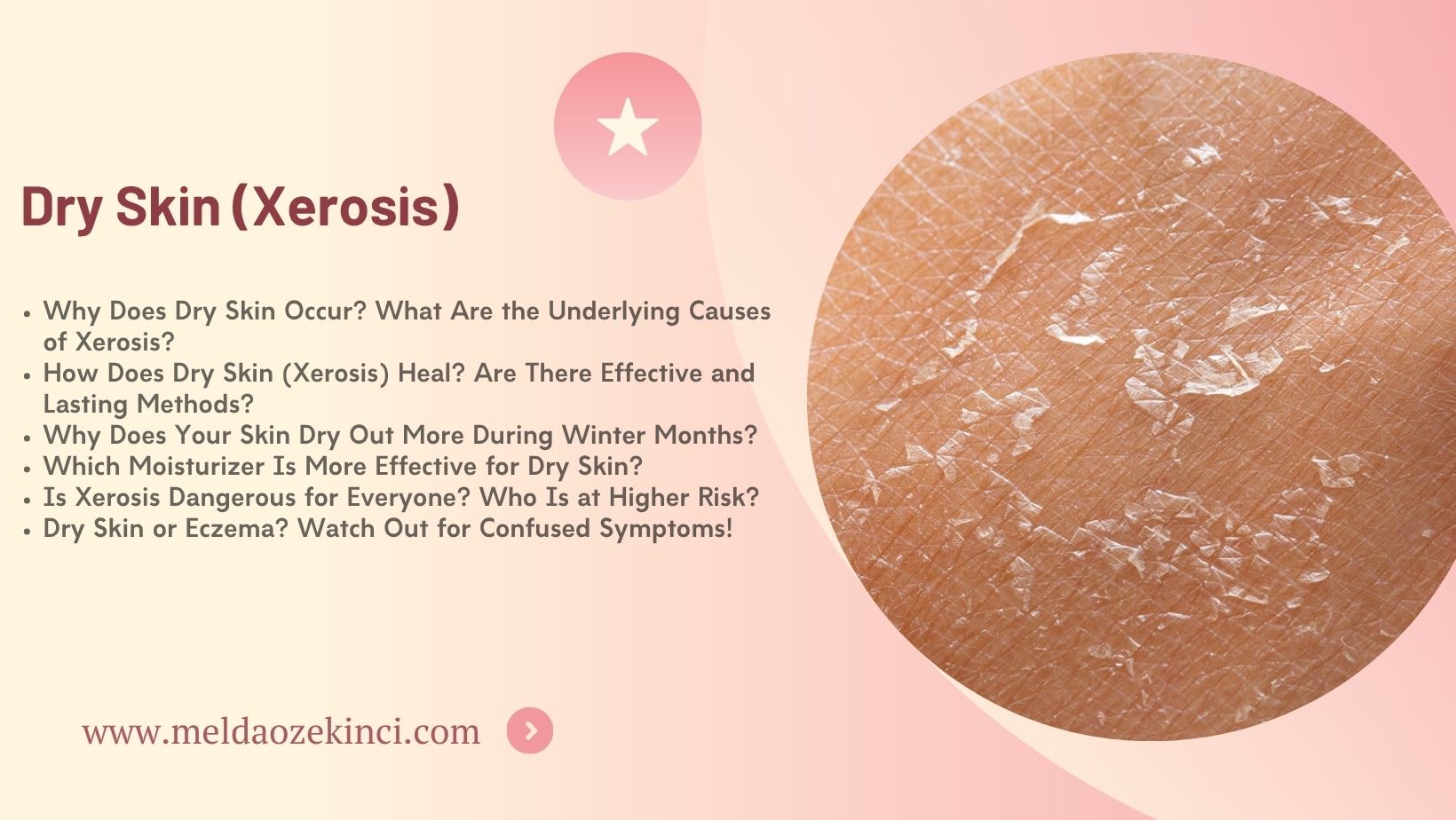

Table of Contents
- Why Does Dry Skin Occur? What Are the Underlying Causes of Xerosis?
- How Does Dry Skin (Xerosis) Heal? Are There Effective and Lasting Methods?
- Why Does Your Skin Dry Out More During Winter Months?
- Which Moisturizer Is More Effective for Dry Skin?
- Is Xerosis Dangerous for Everyone? Who Is at Higher Risk?
- Dry Skin or Eczema? Watch Out for Confused Symptoms!
- Frequently Asked Questions
Why Does Dry Skin Occur? What Are the Underlying Causes of Xerosis?
Dry skin, or medically known as xerosis, is a skin problem that appears more frequently especially in cold weather or in environments with low humidity. It manifests with feelings of tightness, flaking, and itching. However, this condition is not only caused by environmental factors but can also be due to various internal reasons.
One of the most common causes is insufficient moisturizing. When the skin loses its natural oil barrier, it also loses its capacity to retain water. Taking baths with excessively hot water and using aggressive cleansers like soap can also reduce the skin's moisture, increasing dryness.
Additionally, some chronic diseases can trigger xerosis. For example, thyroid disorders, diabetes, or conditions like atopic dermatitis disrupt the normal moisture balance of the skin, paving the way for dryness. Nutritional deficiencies, especially lack of omega-3, zinc, and vitamin A, are also contributing factors to dry skin.
Dermatologist Specialist Dr. Melda Özekinci emphasizes that moisturizing alone is not sufficient in treating dry skin, and that underlying causes must definitely be evaluated. In this context, she offers professional solutions aimed at repairing the skin barrier through personalized treatment plans. The process especially begins with skin analysis, followed by recommendations of medical care and support products according to the skin's needs.
According to Özekinci, strengthening the skin barrier not only improves aesthetic appearance but also creates a protective effect against skin diseases. Therefore, attention must be paid not only to external factors but also to maintaining internal balance.
How Does Dry Skin (Xerosis) Heal? Are There Effective and Lasting Methods?
Dry skin, medically known as xerosis, is not just an aesthetic problem but also a condition that affects quality of life. Symptoms such as itching, flaking, and tightness can increase especially under cold weather conditions or with improper care. So how does dry skin heal? What are effective and lasting methods?
The first and most fundamental step is the regular use of moisturizing products. However, not every product on the market is suitable for every skin type. The dermatologist highlights the importance of personalized product selection. Especially dermocosmetic products containing ingredients that repair the skin barrier are quite successful in preventing water loss from the skin.
One common mistake is taking a bath with hot water and leaving the skin dry afterwards. Actually, applying intensive moisturizers on slightly damp skin after showering helps to preserve the trapped water. Also, soft cleansers with balanced pH should be preferred instead of harsh cleansers like soap.
Internal support should not be ignored either. Nutrients such as omega-3, vitamin E, and zinc play an important role in fighting dry skin. At this point, the doctor’s holistic approach aims to control dry skin not only externally but also internally. When needed, professional supports such as medical skin care can be considered under a dermatologist’s supervision.
Especially during winter months, regular dermatologist follow-up and skin analysis can personalize the treatment process. The doctor develops special protocols for each patient, aiming not only for temporary solutions but also for lasting improvements.
Why Does Your Skin Dry Out More During Winter Months?
Dry skin is a common complaint for many during the winter months. With cold weather, symptoms such as tightness, itching, and flaking can appear. But why? The causes lie not only in the temperature but also in our lifestyle habits.
First of all, the decreased humidity level in winter is one of the biggest enemies of the skin. When there is not enough moisture in the air, water evaporates quickly from the skin and the epidermis layer weakens. This makes the skin more sensitive, dry, and prone to irritation.
Another factor is use of heating. Radiators or air conditioners used at homes and offices dry out indoor air, disrupting the skin's natural moisture balance. The dermatologist especially draws attention to the importance of indoor humidification during this period. Unless indoor humidity is balanced with humidifiers or natural methods, the skin barrier weakens.
In addition, the tendency to drink less water in winter also negatively affects skin health. When the body’s internal fluid balance is not maintained, skin cells cannot be sufficiently nourished or renewed. The doctor advises her patients to take care both externally and internally on this matter.
Also, many people neglect sun protection in winter. Among the doctor’s recommended dermocosmetic products are moisturizers and protectors developed with special formulas suitable for sensitive skin in winter.
Excessive use of hot water in showers can also destroy the lipid layer of the skin, making it vulnerable to external factors. The doctor recommends short warm showers followed by proper moisturizing support with the right products.
Which Moisturizer Is More Effective for Dry Skin?
One of the most effective ways to deal with dry skin is choosing the right moisturizer. However, among dozens of options in the market, it may not be easy to determine which one suits your skin. The dry skin type is generally sensitive, prone to cracking, and vulnerable to external factors. Therefore, the product used should not only moisturize but also strengthen the skin barrier.
Moisturizers containing hyaluronic acid, ceramide, or glycerin are ideal for dry skin because of their high water retention capacity. These ingredients help trap moisture on the skin surface and provide long-lasting comfort. Especially during winter months, these kinds of formulas are indispensable for skin health.
Among the products recommended by the dermatologist are dermocosmetic moisturizers with high tolerance and rich content. According to the doctor, treating dry skin is not sufficient with just superficial solutions. Products that reach deep layers of the skin and repair the skin barrier should be preferred.
Also, products containing alcohol and perfume should be avoided, preferring instead hypoallergenic and pH balanced formulas. Such products prevent irritation and can be safely used even on sensitive skin.
Clinical observations and scientific studies show that regular moisturizing can greatly reduce dry skin problems. The doctor recommends applying moisturizer twice a day, in the morning and evening, and also immediately after bathing on damp skin.
Is Xerosis Dangerous for Everyone? Who Is at Higher Risk?
Xerosis, commonly known as dry skin, often seems like a simple skin problem but can pose serious risks for some groups. Its effects can be felt more severely especially depending on age, lifestyle, and some health conditions.
First of all, elderly individuals form the highest risk group in this regard. As the skin loses its natural moisture and elasticity with age, these individuals more frequently experience deep cracks, itching, and susceptibility to infections. Dryness especially on legs and hands can seriously affect quality of life.
The second important group consists of individuals with atopic dermatitis or eczema. In these people, xerosis affects not only the skin surface but also the immune system, triggering inflammation. This situation requires more intensive care and proper treatment.
The dermatologist develops special diagnostic and treatment protocols for these risk groups in her clinic. Especially for individuals with sensitive immune systems, the hydration therapies and personalized care routines she recommends achieve great success in restoring skin health.
Furthermore, diabetics and individuals with systemic diseases such as thyroid disorders may also see dry skin as an important warning sign. In such cases, a treatment plan should be implemented considering both the underlying disease and symptomatology, not just topical products.
Those who shower frequently or overuse soap and alcohol-based cleansing products may also find themselves at risk. Therefore, gentle, moisturizing products suitable for skin type should be preferred.
Dry Skin or Eczema? Watch Out for Confused Symptoms!
Nowadays, many people interpret dryness, itching, and flaking on their skin simply as dry skin. However, these symptoms are not always harmless. It is quite common for them to be confused with chronic skin diseases such as eczema.
Dry skin is generally due to external factors: cold weather, long hot showers, excessive use of soapy products, etc. In such dryness, mild tightness, flaking, and sometimes cracking are observed on the skin. Quick recovery is seen when moisturizers are applied.
On the other hand, eczema presents a more complex picture. Itching is usually more intense and redness increases with scratching. In eczema-affected areas, occasional oozing, crusting, and thickening may be seen. Moreover, these symptoms are not seasonal; they can be triggered by stress, allergens, and immune system responses.
When patients have difficulty distinguishing between these two conditions, diagnosis can be delayed. At this point, the dermatologist ensures accurate diagnosis not only by looking at symptoms but also through detailed skin analyses and personalized diagnostic methods.
Incorrect treatment can worsen conditions like eczema. Therefore, it can be a big mistake to say that every dryness that improves with moisturizer is “insignificant.”
If your dry skin recurs frequently, does not improve despite moisturizers, or is accompanied by redness, irritation, or cracks with itching, consulting a dermatologist is essential. Especially since eczema in children is more common and sensitive, professional evaluation should be done as soon as symptoms are noticed.
Frequently Asked Questions
How many times a day should a moisturizer be applied to dry skin?
In general, applying it twice a day, in the morning and evening, and especially after bathing while the skin is still slightly damp, is recommended. Very dry areas may need an extra application during the day.
Does a hot shower make dry skin worse?
Yes. Long, very hot showers reduce the skin’s natural oil layer. Short lukewarm showers and gentle, pH-balanced cleansers are preferable.
How can dry skin be told apart from eczema?
Itching is usually more intense in eczema and may come with redness, crusting, or oozing; complaints do not fully resolve with moisturizer. If in doubt, a dermatological examination is needed.
When should I see a doctor about dry skin?
See a dermatologist if dryness does not improve with moisturizer, or if you have intense itching, cracks, redness, or frequently recurring complaints.





