 English


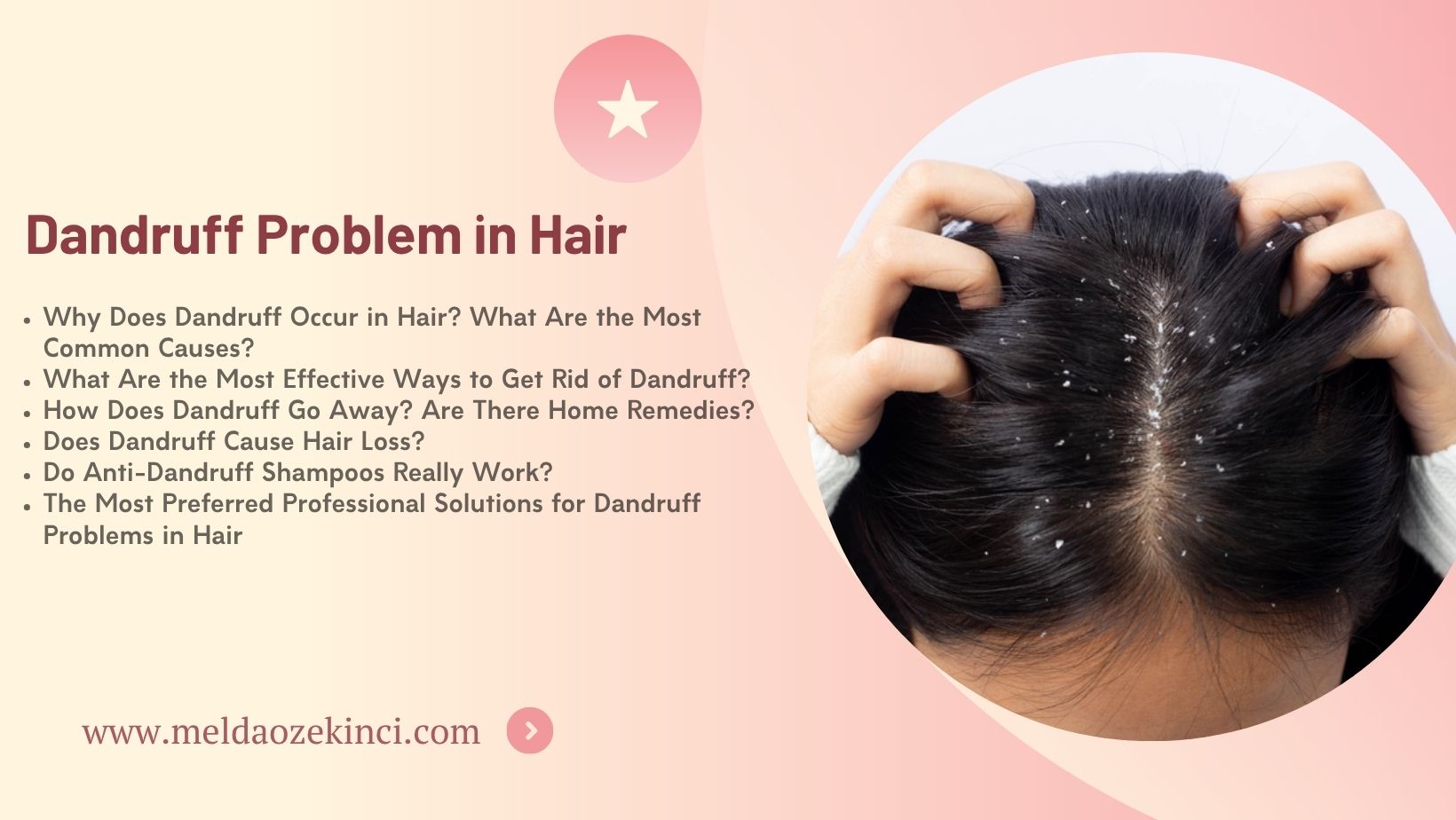

Table of Contents
- Why Does Dandruff Occur in Hair? What Are the Most Common Causes?
- What Are the Most Effective Ways to Get Rid of Dandruff?
- How Does Dandruff Go Away? Are There Home Remedies?
- Does Dandruff Cause Hair Loss?
- Do Anti-Dandruff Shampoos Really Work?
- The Most Preferred Professional Solutions for Dandruff Problems in Hair
- Frequently Asked Questions
Why Does Dandruff Occur in Hair? What Are the Most Common Causes?
Dandruff in hair is a common problem many people encounter in daily life. However, for those who do not have enough information about its causes, this situation can be quite annoying. As Dermatologist Specialist Dr. Melda Özekinci emphasizes, there are various causes underlying dandruff, and knowing them is essential for the right approach.
The most common cause is dry scalp and disruption of the natural oil balance in the skin. This leads to flaky peeling on the scalp. On the other hand, skin diseases like seborrheic dermatitis are also important causes of dandruff. This condition can cause intense dandruff along with itching and redness on the scalp.
Fungal infections are frequently observed factors in dandruff formation. Especially the fungus called Malassezia multiplies excessively on the scalp and triggers dandruff. Dermatologist Specialist Dr. Melda Özekinci states that fungal-related dandruff problems can be controlled with appropriate treatment.
Stress, hormonal changes, and wrong hair care products can also increase dandruff formation. Excessive shampoo use or insufficient rinsing of hair causes irritation on the scalp, paving the way for dandruff. Therefore, hair care routines need to be created carefully.
Nutrition habits and general health condition can also affect dandruff. The dermatologist recommends those with dandruff complaints to get professional support first and ensure correct diagnosis of the underlying cause.
What Are the Most Effective Ways to Get Rid of Dandruff?
Dandruff is one of the common discomforts encountered frequently on hair and scalp. The dermatologist emphasizes that the first step to get rid of dandruff is a proper diagnosis and treatment approach. Because the causes of dandruff may vary, action should be taken accordingly.
The first and most important way to get rid of dandruff is regular and proper hair cleansing. However, the content of the shampoo used here is critically important. Antifungal content and dermatologically approved products are effective in reducing fungus-related dandruff. Being sensitive in shampoo selection protects scalp health and prevents dandruff formation.
Another effective method is moisturizing the scalp and preventing dryness. Dry scalp triggers flaky peeling which promotes dandruff. Therefore, hair care oils and special moisturizers can be used. However, it is important to follow the recommendations of The dermatologist when using any product.
Also, nutrition and lifestyle changes play a role in getting rid of dandruff. Especially vitamin B deficiency and insufficient water consumption can negatively affect scalp health. Stress management and regular sleep strengthen the immune system and reduce dandruff formation.
If dandruff persists for a long time, professional help should definitely be sought. The dermatologist states that with proper diagnosis and treatment planning, dandruff problems can be largely controlled.
How Does Dandruff Go Away? Are There Home Remedies?
Dandruff in hair is an annoying problem faced by many. The dermatologist discusses the causes and treatment methods in detail, emphasizing the importance of especially practical solutions that can be applied at home. Dandruff on the scalp can usually result from dryness, fungal infections, or skin issues.
There are simple but effective methods for dandruff treatment at home. One of them is regularly cleaning the scalp and using an appropriate shampoo. Antifungal shampoos are among the most recommended products to reduce dandruff problems. However, it is necessary to be careful in shampoo selection and prefer formulas that do not harm the scalp.
The safest steps at home are cleansing the scalp regularly and gently, using an antifungal shampoo recommended by a doctor or pharmacist, and not scratching the scalp with the nails. The effect of natural applications such as apple cider vinegar, olive oil, or coconut oil against dandruff has not been sufficiently demonstrated. Especially in dandruff caused by seborrheic dermatitis and Malassezia, oils may build up on the scalp and worsen the complaint, while vinegar may irritate sensitive skin. These methods are therefore not recommended.
It should be remembered that home methods alleviate dandruff but in chronic and severe cases, professional support is necessary. The dermatologist provides permanent solutions with appropriate treatment and correct product selection.
Does Dandruff Cause Hair Loss?
Dandruff problem is a common skin issue encountered by many. So, is it directly related to hair loss? The dermatologist provides important information on this subject. Dandruff consists of dead skin particles on the scalp and mostly results from fungal infections or excessive oil production.
Dandruff itself does not directly cause hair loss; however, severe itching and scalp irritation can damage hair roots. This indirectly increases the risk of hair loss. Also, if dandruff is left untreated for a long time, inflammation may develop on the scalp, negatively affecting hair health.
To prevent hair loss and get rid of dandruff, proper care is essential. The dermatologist recommends regular use of antifungal shampoos suitable for the scalp. Avoiding scratching the scalp with the nails and using a suitable shampoo helps reduce excessive itching.
Using shampoo alone may not be enough to cope with dandruff problems. Stress management, healthy nutrition, and selecting products that do not irritate the scalp are critical for hair health. During this process, professional help ensures permanent resolution of the problem as The dermatologist emphasizes.
Do Anti-Dandruff Shampoos Really Work?
Anti-dandruff shampoos are among the commonly preferred products for dandruff problems on the scalp. However, whether these products really work is often debated. The dermatologist provides clear information on this matter.
Dandruff is usually caused by fungal infections on the scalp and excessive oil production. Therefore, anti-dandruff shampoos target the problem on the scalp with antifungal and anti-inflammatory ingredients. However, since everyone’s hair type and scalp condition differ, the effectiveness of shampoos may vary from person to person.
The dermatologist emphasizes that anti-dandruff shampoos not only provide temporary relief but also reduce fungi on the scalp with regular and correct use, thus providing dandruff control. However, shampoo alone may not be sufficient; healthy nutrition, stress avoidance, and supportive hair care routines are also necessary.
There are many different formulations and contents of anti-dandruff shampoos on the market. Therefore, seeking expert advice and choosing the product suitable for your hair type is the key to effective results. The dermatologist also notes that additional treatment methods may be required alongside shampoos.
The Most Preferred Professional Solutions for Dandruff Problems in Hair
Dandruff problems in hair are a common issue causing discomfort both aesthetically and health-wise. Professional solutions offer effective interventions targeting the root cause of this problem, providing long-term relief. The methods recommended by The dermatologist include both medical and care-focused applications.
Dandruff is usually caused by fungal infections or excessive oiliness on the scalp. Therefore, the most preferred professional solutions include medical shampoos as the first option. These shampoos effectively reduce fungi on the scalp and prevent dandruff formation.
In addition, treatments like scalp peeling remove dead skin and help keep hair roots healthy. The dermatologist states that regular applications of such treatments play a critical role in reducing scalp problems.
Moreover, laser therapy and topical medications are preferred solutions in severe dandruff cases. These methods reduce inflammation on the scalp and improve hair health. The dermatologist emphasizes that every treatment process should be planned individually.
Medical shampoos may contain active ingredients such as ketoconazole, ciclopirox, zinc pyrithione, or selenium sulfide. They are usually used two to three times a week, and the lather is left on the scalp for a few minutes before rinsing. When the complaint is marked, the doctor may plan a short course of topical anti-inflammatory treatment. If dandruff does not go away after a few weeks of regular care, or if itching, redness, or crusting increases, the scalp should be examined and other possibilities such as seborrheic dermatitis, psoriasis, or a fungal infection should be evaluated. Treatment should be personalized, and continuing the care routine after dandruff is controlled helps reduce recurrence.
Frequently Asked Questions
Is dandruff contagious?
No. Dandruff is not contagious and does not pass from one person to another. However, the scalp’s fungal balance and skin type differ between people, so the severity varies.
How often should an anti-dandruff shampoo be used?
It depends on the product instructions or your doctor’s advice; usually two to three times a week at the beginning. Leave the lather on the scalp for a few minutes and rinse thoroughly.
Does dandruff cause hair loss?
Dandruff alone does not cause hair loss; however, severe itching, scratching, and inflammation can indirectly affect the hair roots.
When should I see a dermatologist for dandruff?
See a dermatologist if dandruff does not improve after a few weeks of regular care, or if it comes with intense itching, redness, crusting, or hair loss.





